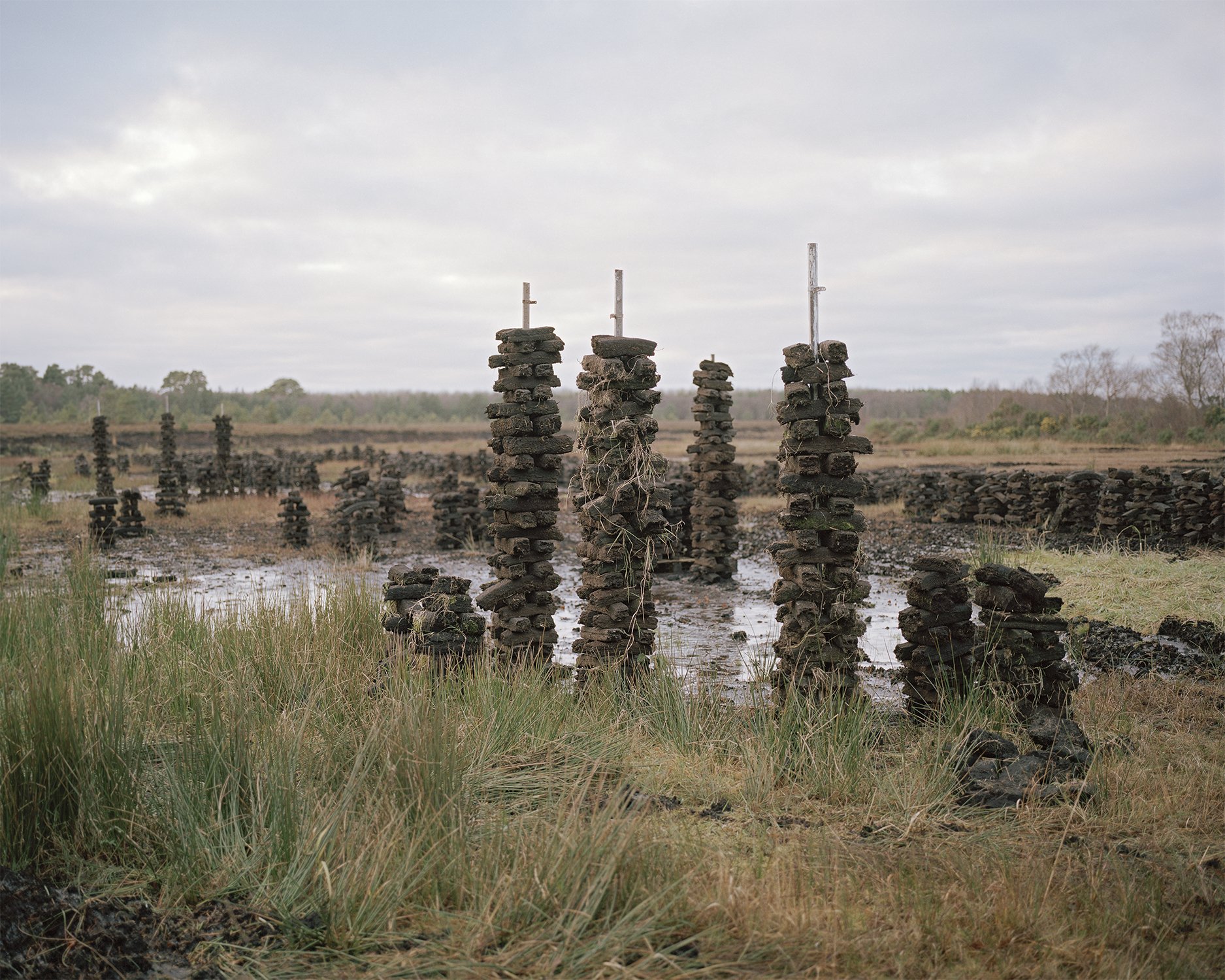
Tony’s Footings, Carbury, County Kildare, 2017.
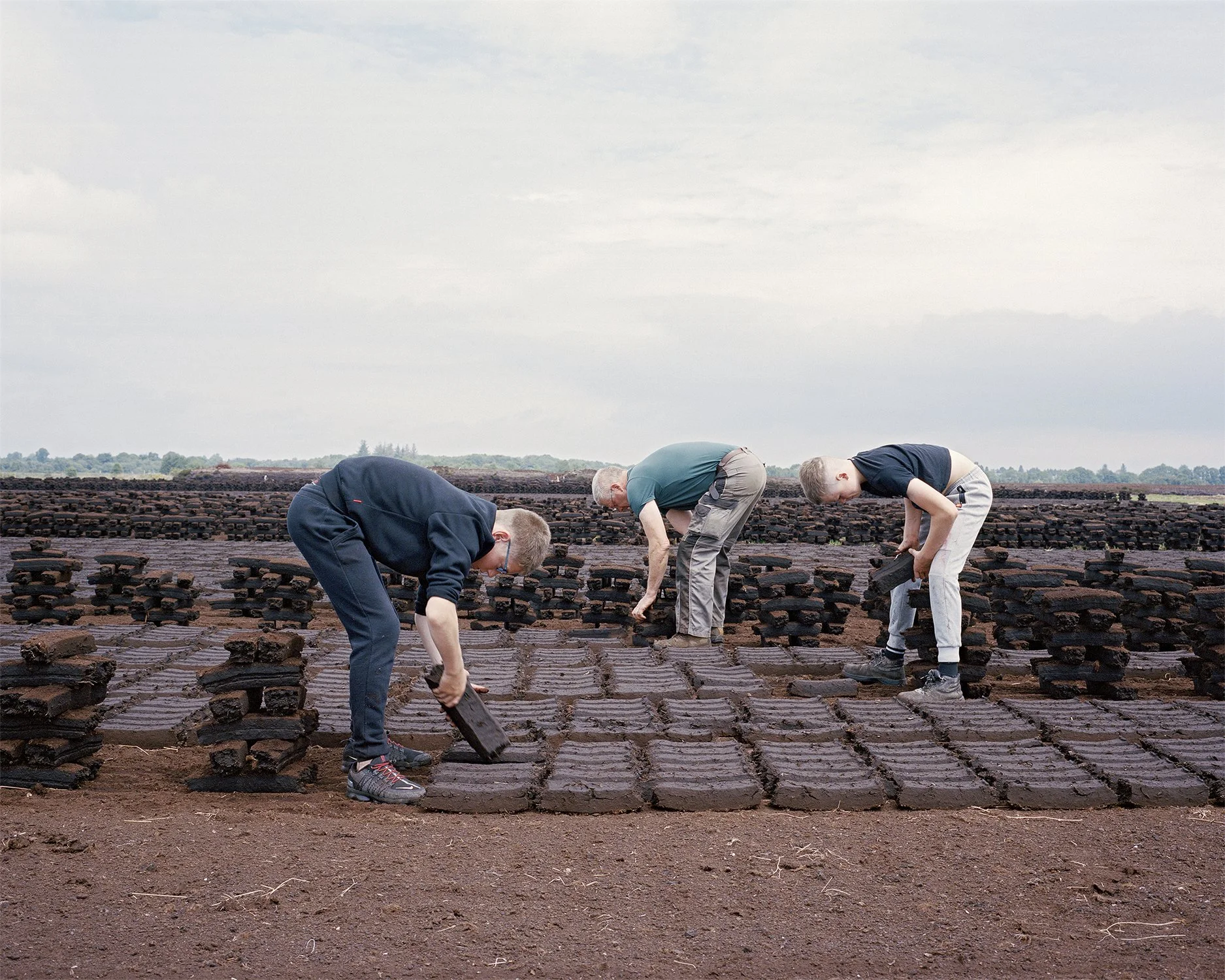
Family footing turf for domestic use, Ticknevin, County Kildare, 2020.
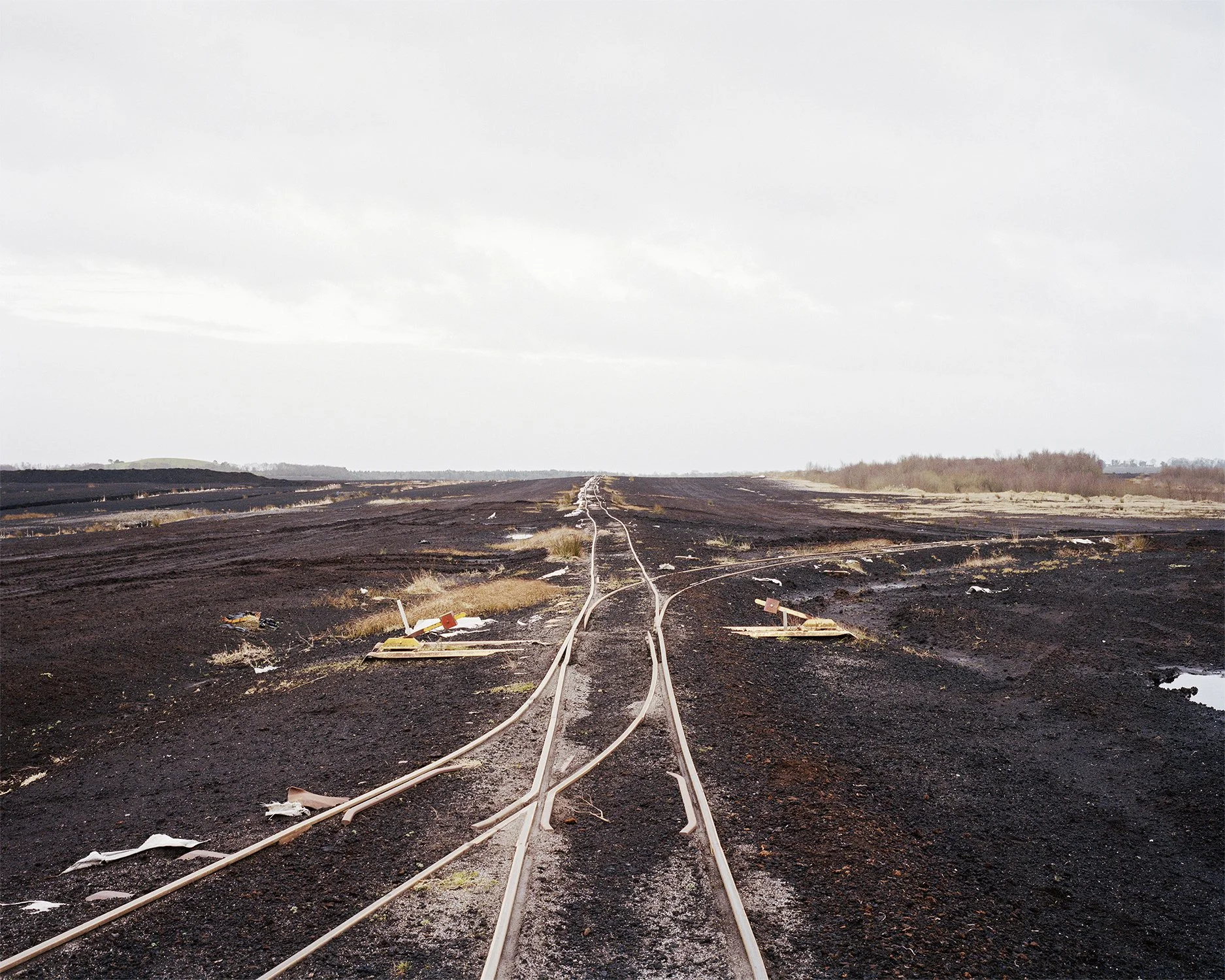
Industrial narrow-gauge railway on Gilltown Bog, County Kildare, 2022.
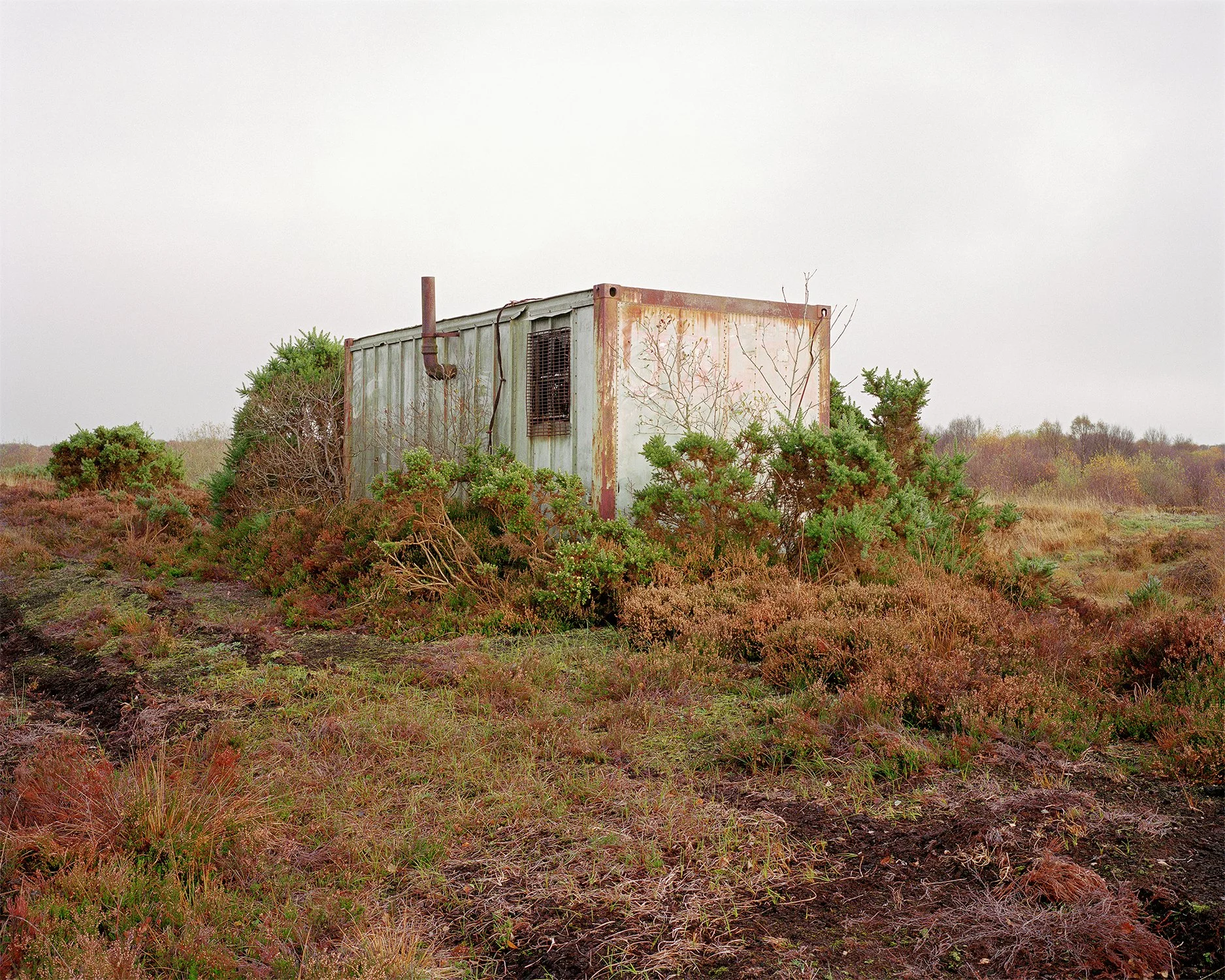
Disused Bord na Móna tea hut, Ballydermot Bog Group, County Offaly, 2022.
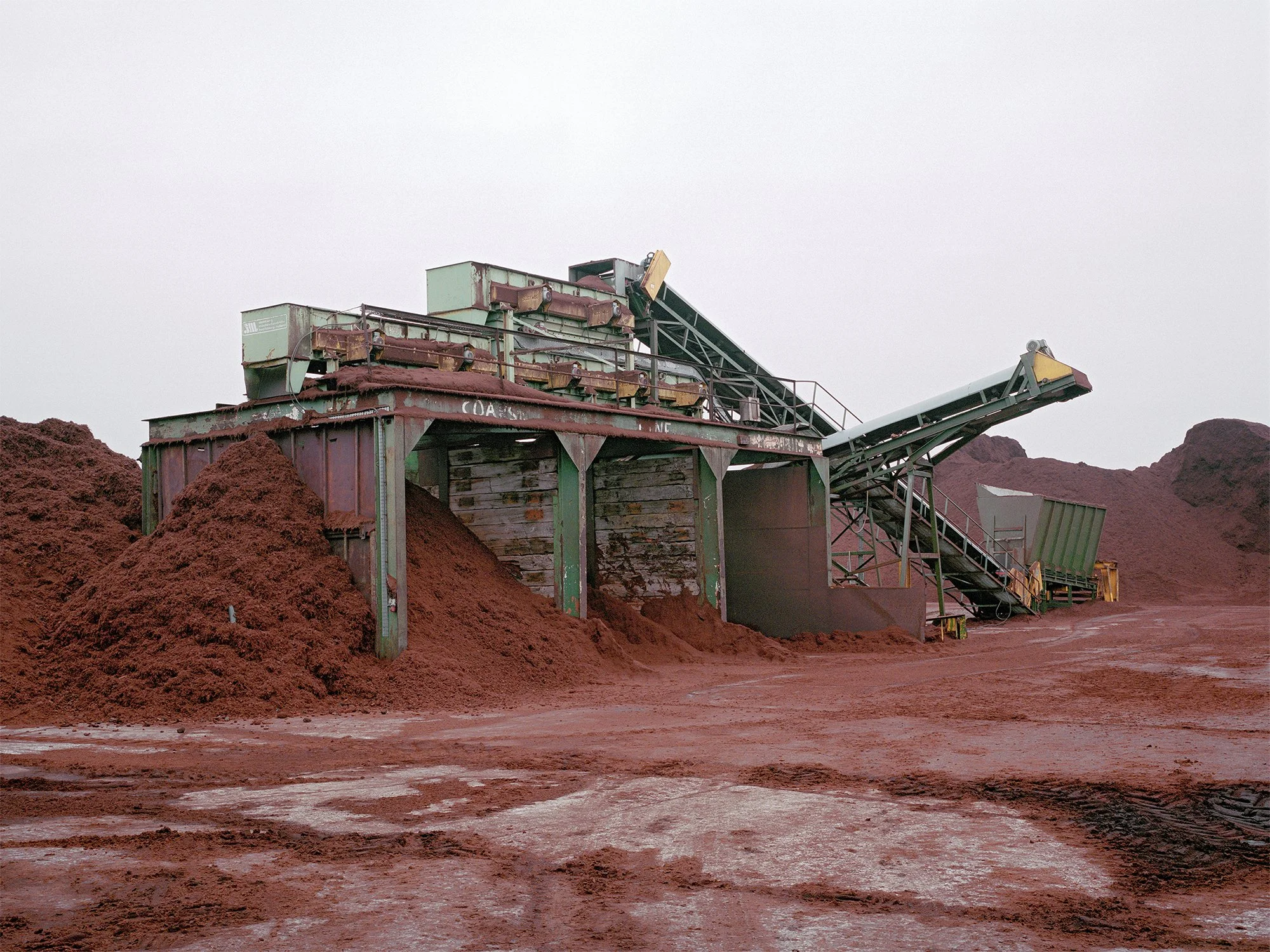
Peat separator for grading milled peat for horticultural use, County Kildare, 2019.
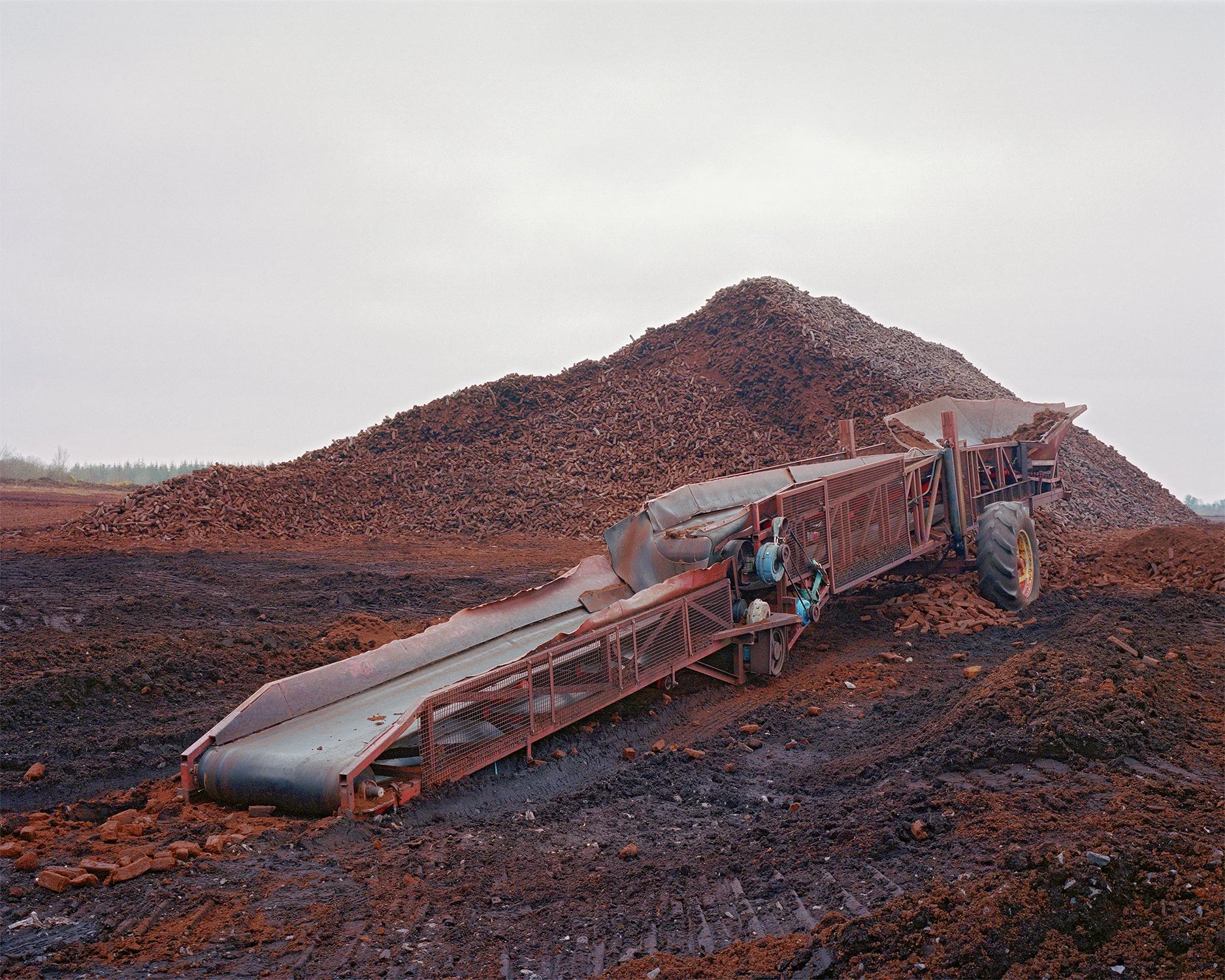
Mechanical hopper and conveyor belt for loading turf for horticultural use by private contractor, County Offaly, 2020.
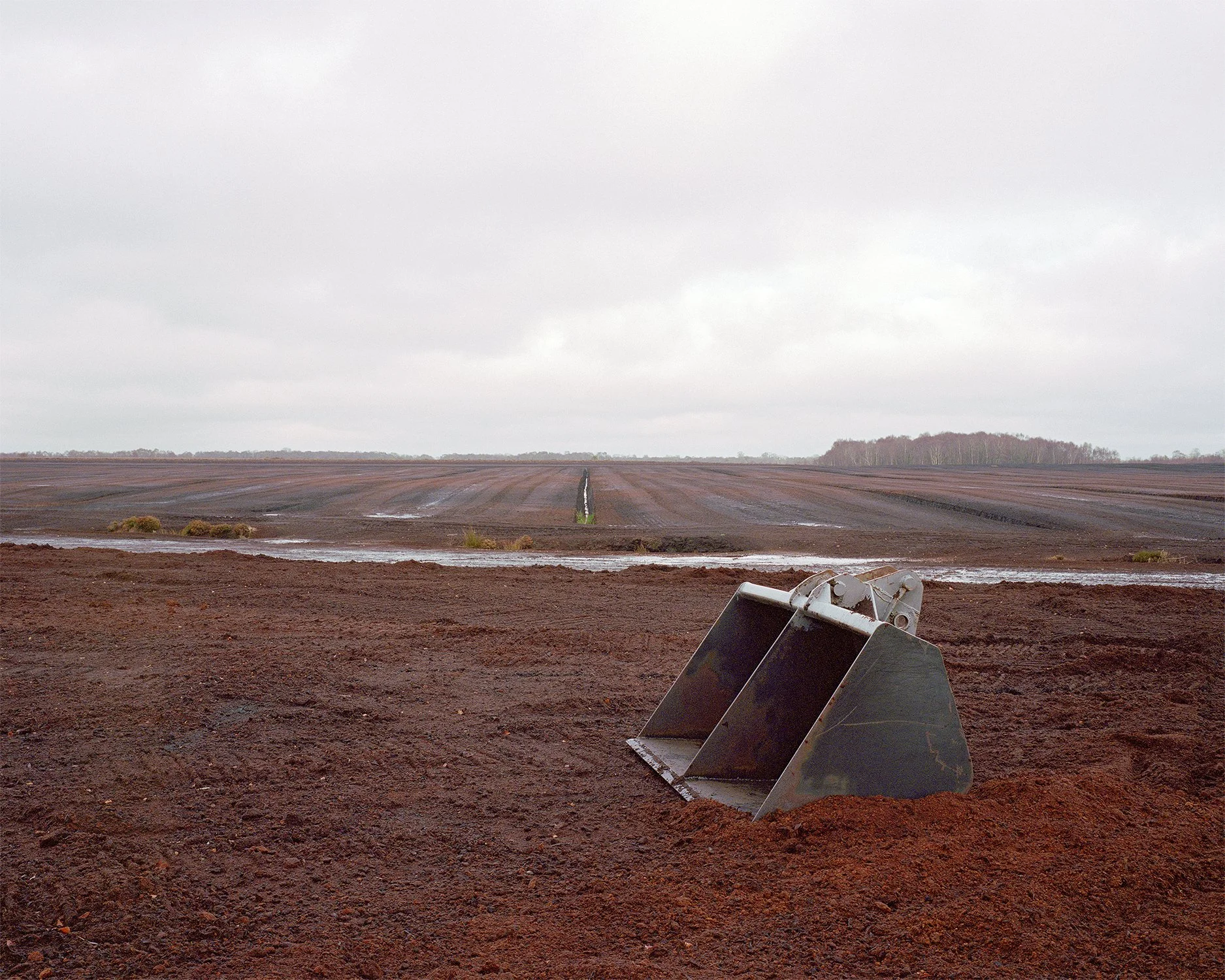
Cadamstown bog, County Kildare, 2020.
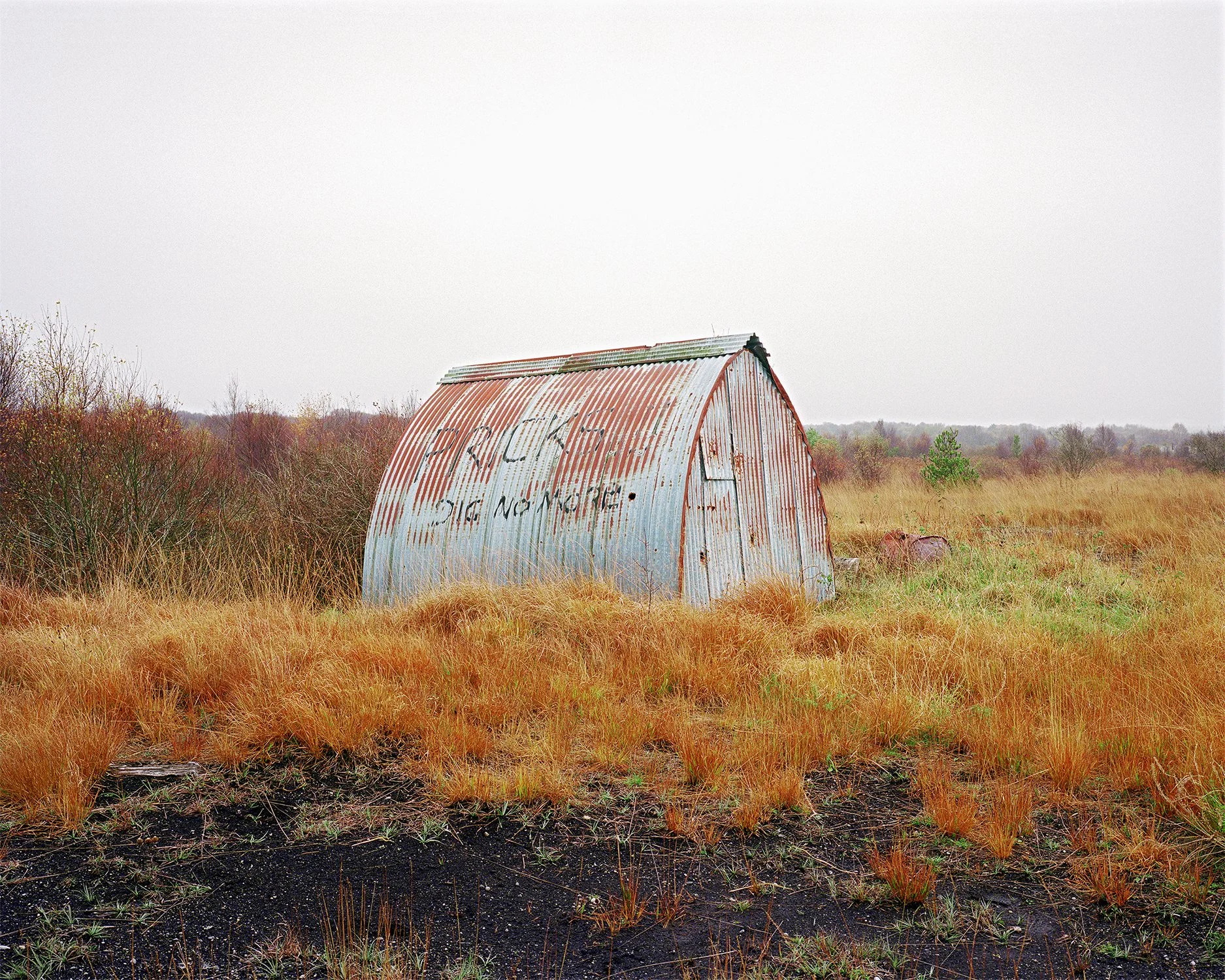
Disused Bord na Móna tea hut, Ballydermot Bog Group, County Offaly, 2022.
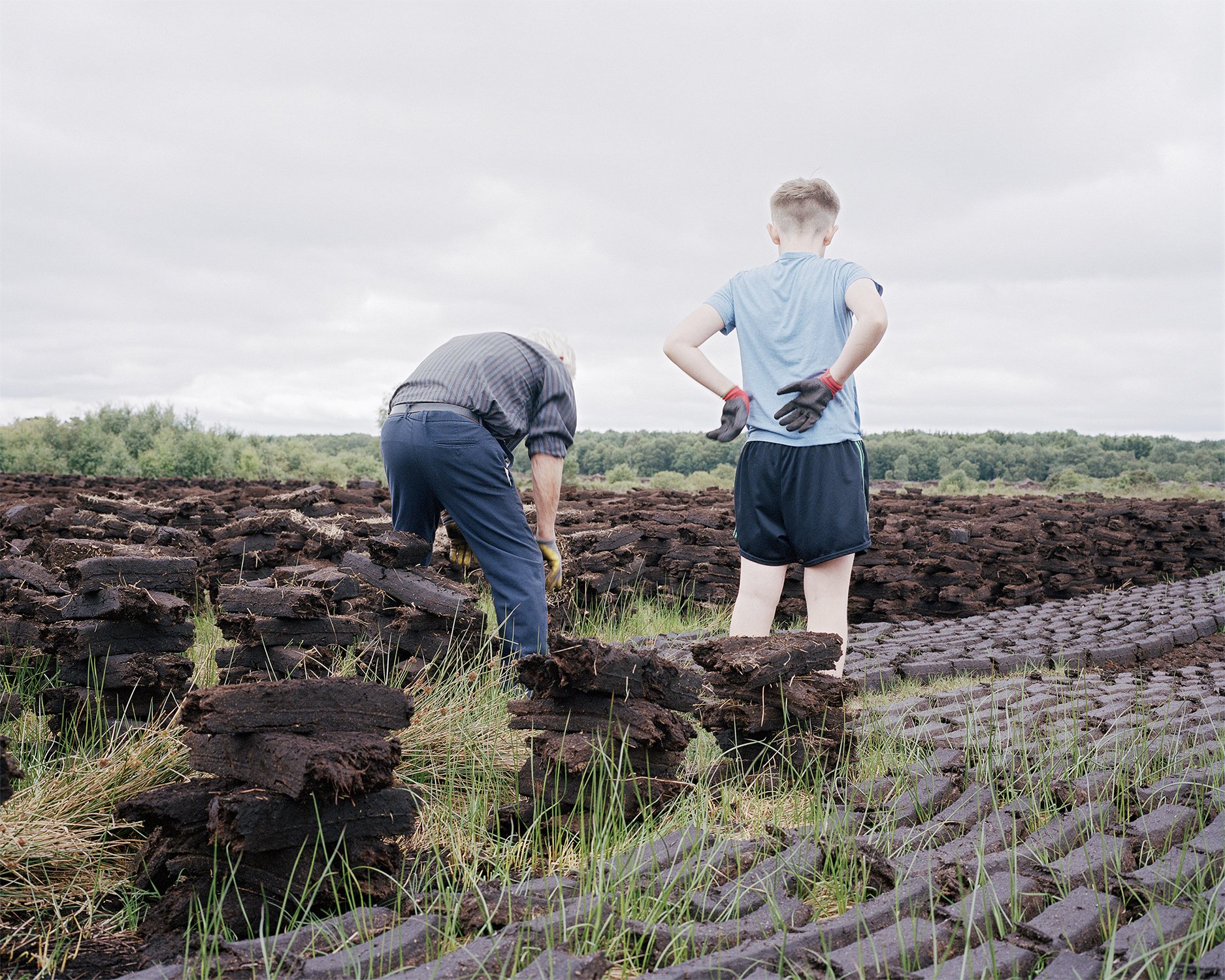
John and Josh footing turf for domestic use, Knockirr Bog, County Kildare, 2019.
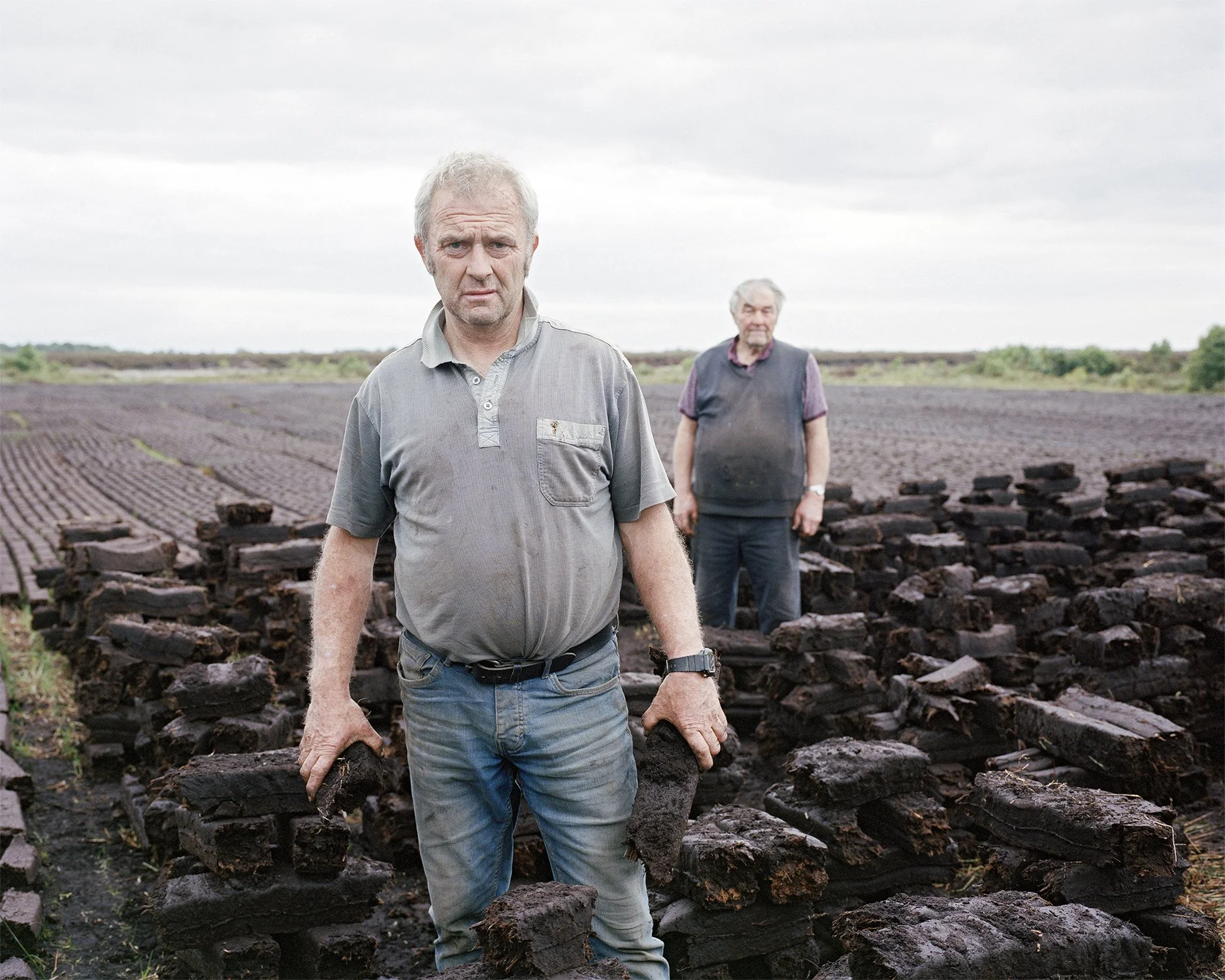
Eddie and Con footing turf for domestic use, Knockirr Bog, County Kildare, 2022.
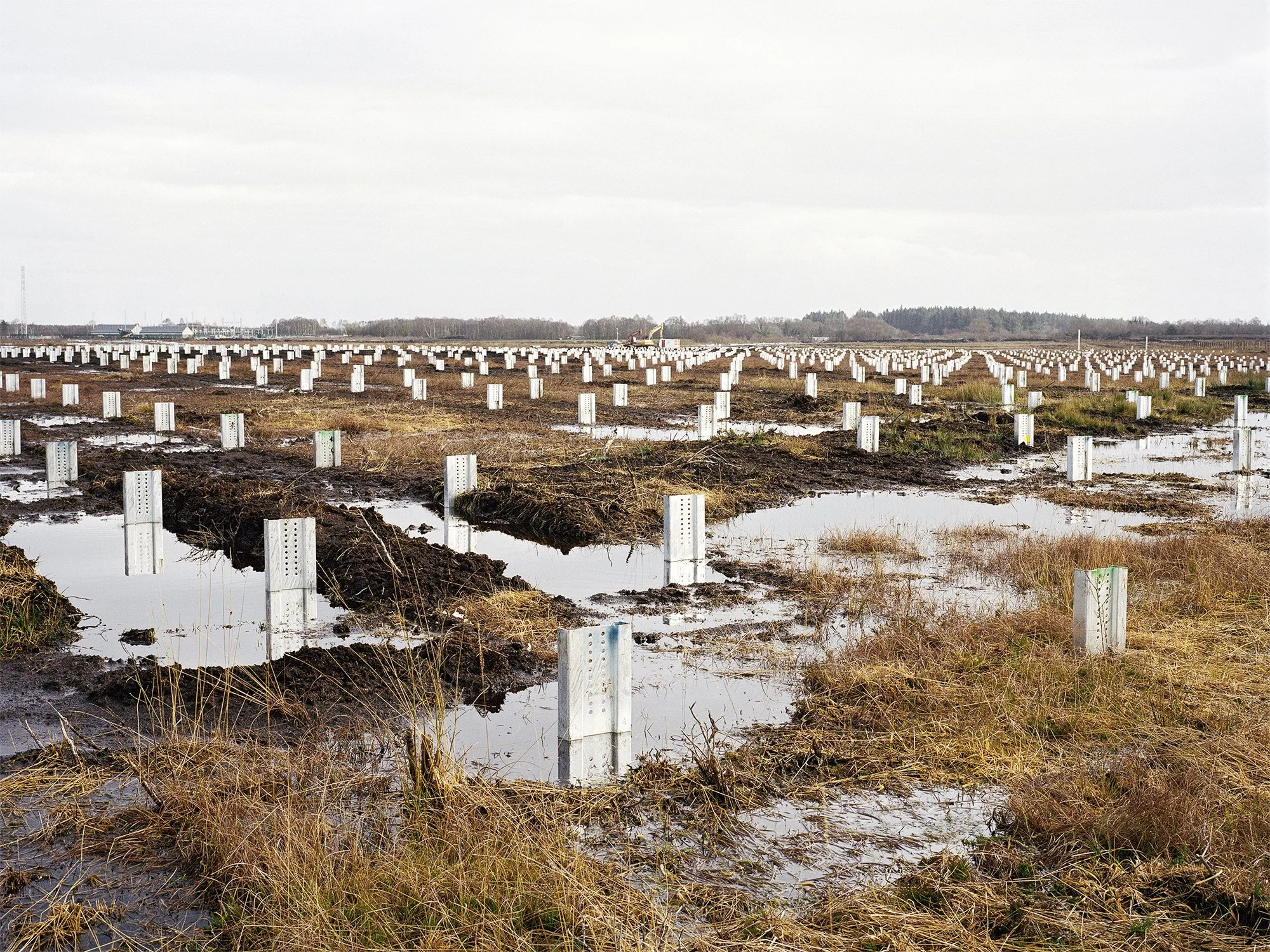
Timahoe South solar farm, County Kildare, 2024.
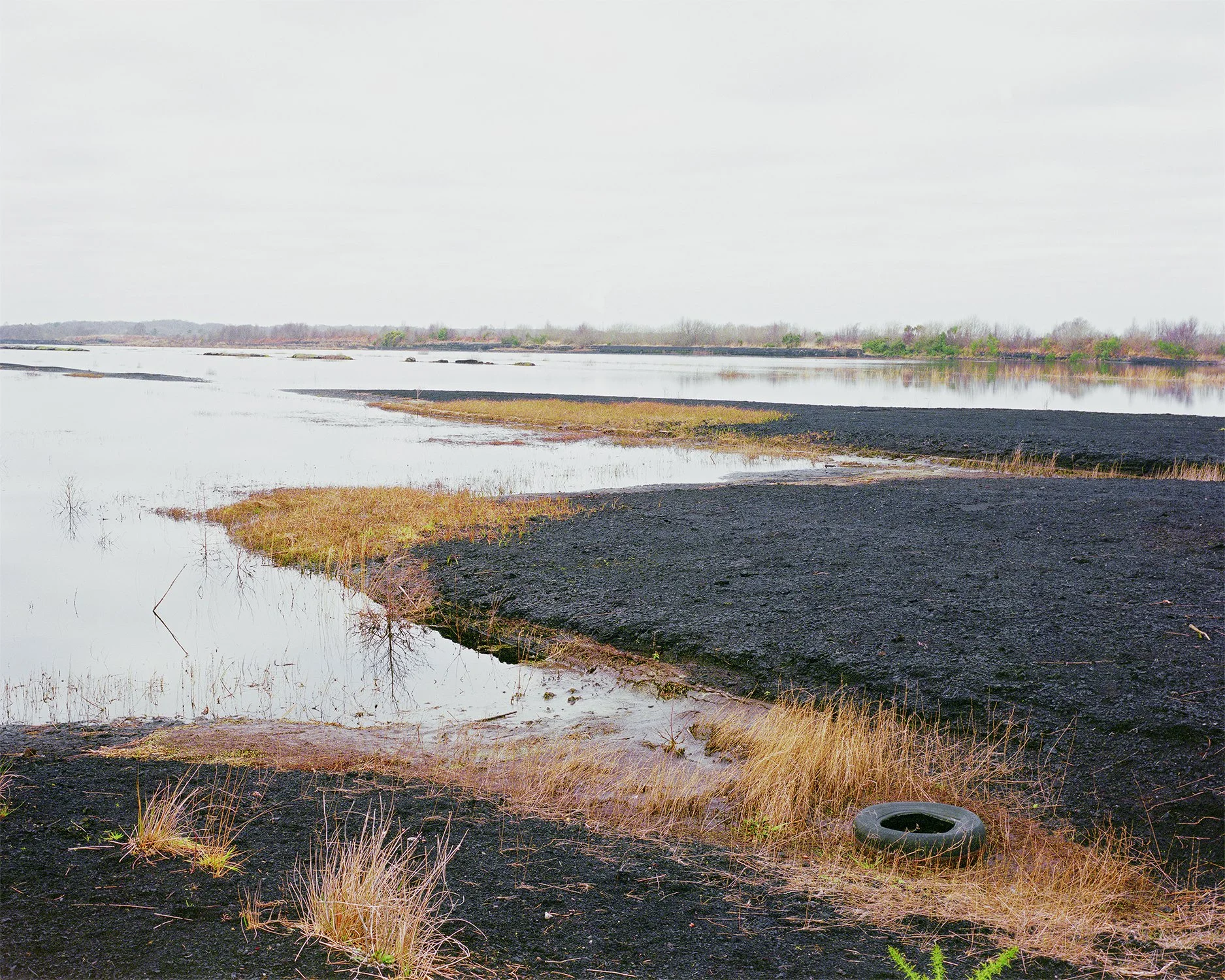
Wet bog after prolonged rain, Ballydermot bog group, County Kildare, 2021.
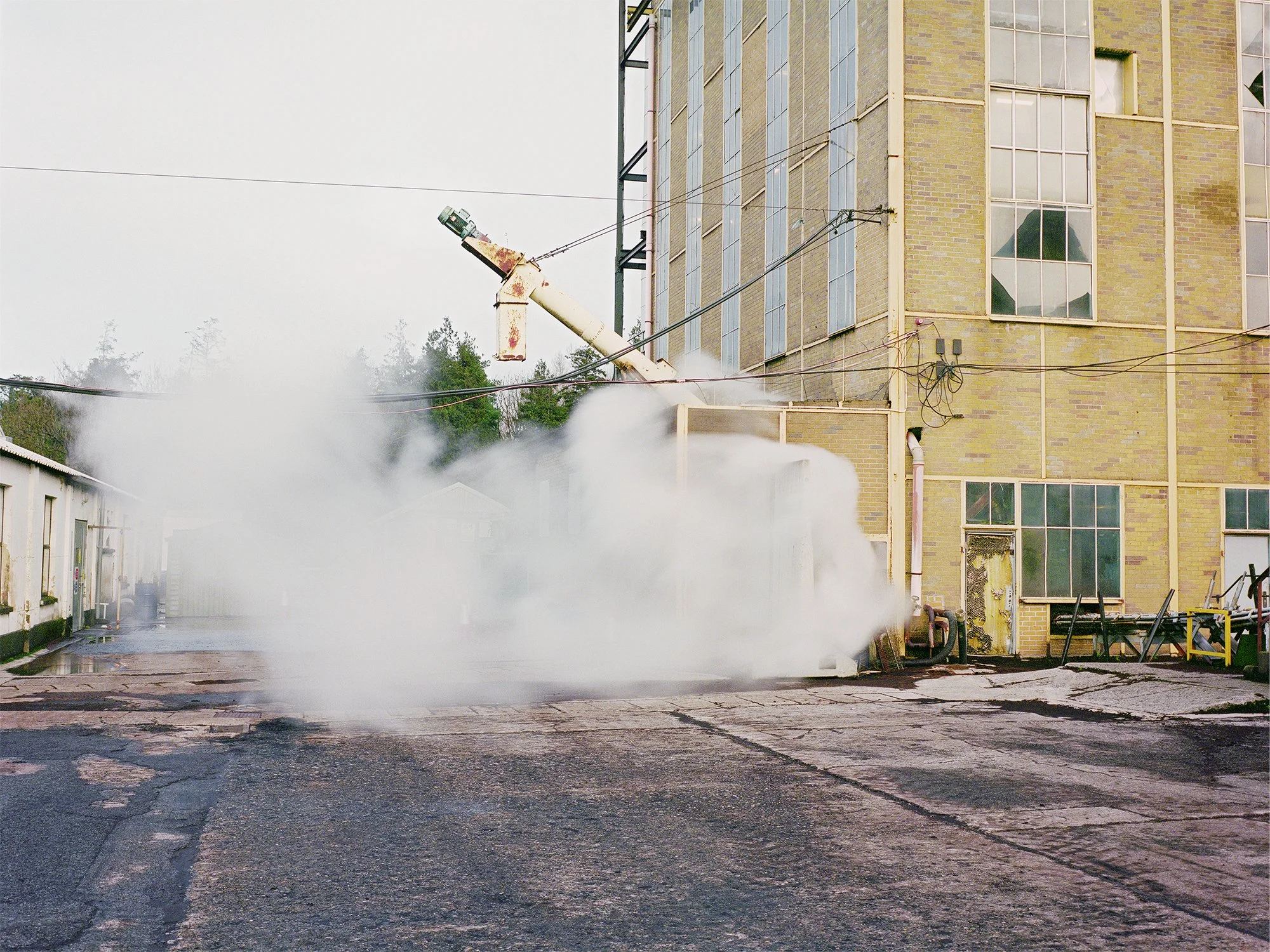
Derrinlough briquette factory, County Offaly, 2023.
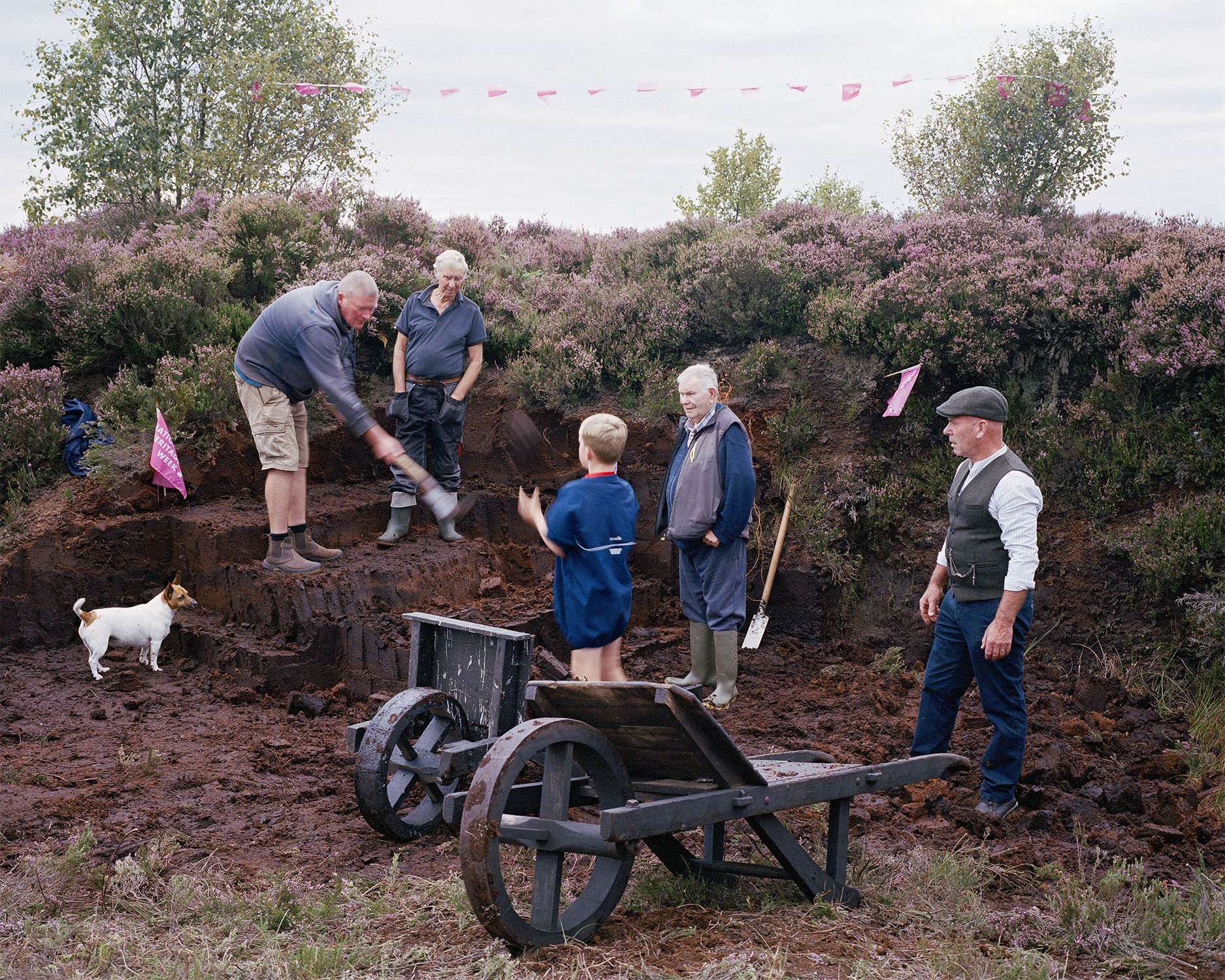
Re-enactment of traditional hand won turf techniques, Ballyteague, County Kildare, 2023.
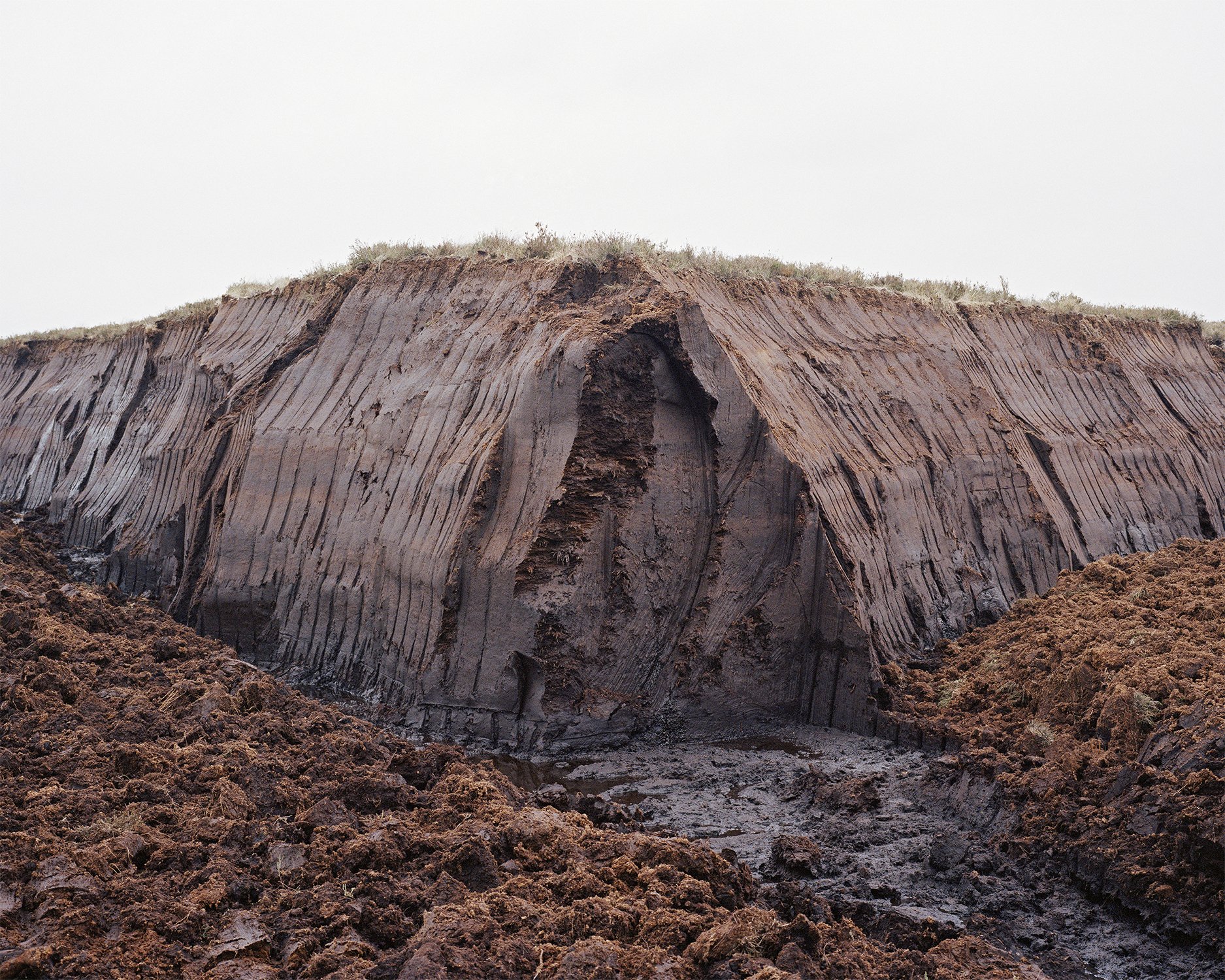
Facebank extracted for turf production, Allenwood, Co. Kildare, 2020.
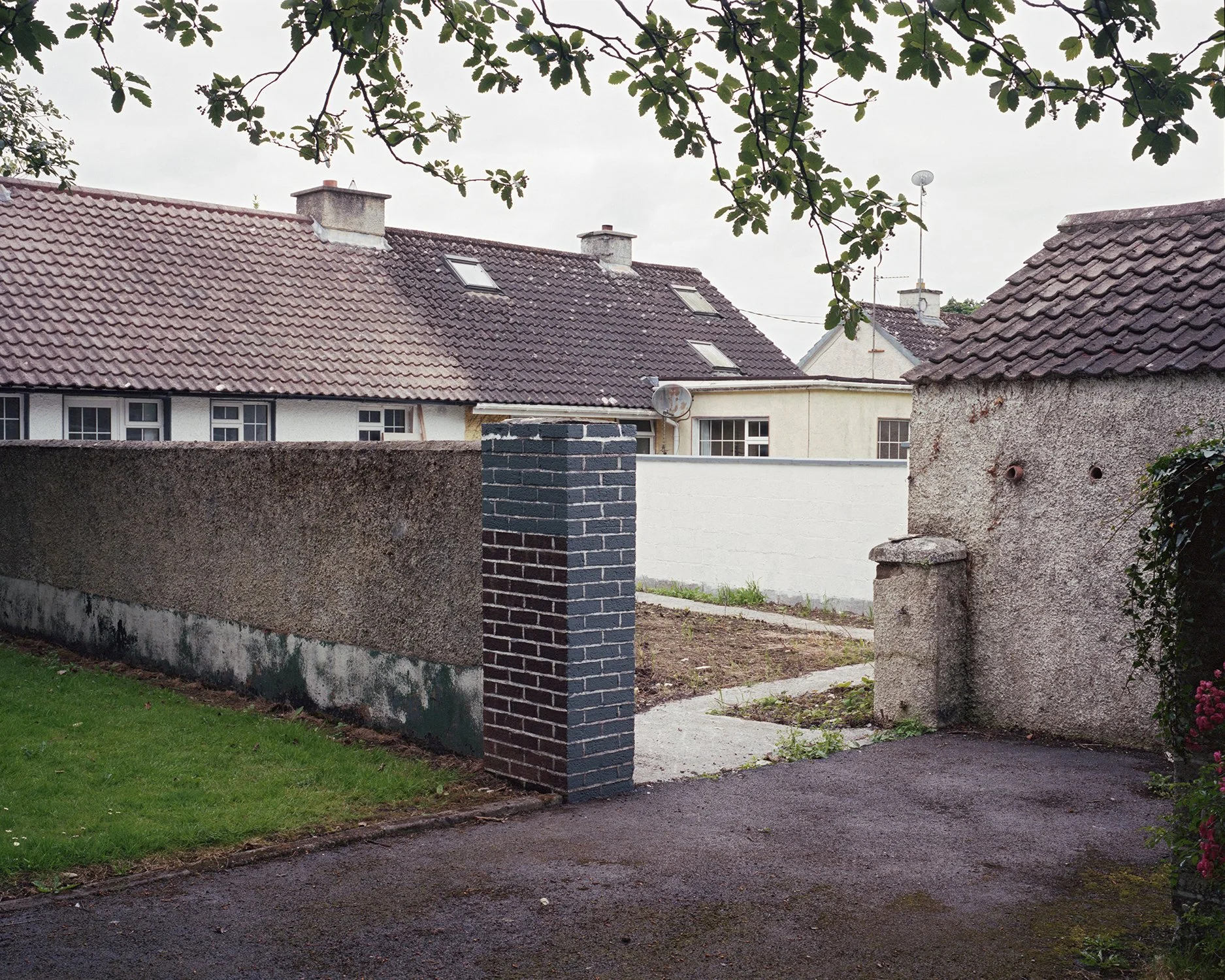
Cloontuskert Frank Gibney designed Bord na Móna workers village, County Roscommon, 2024.
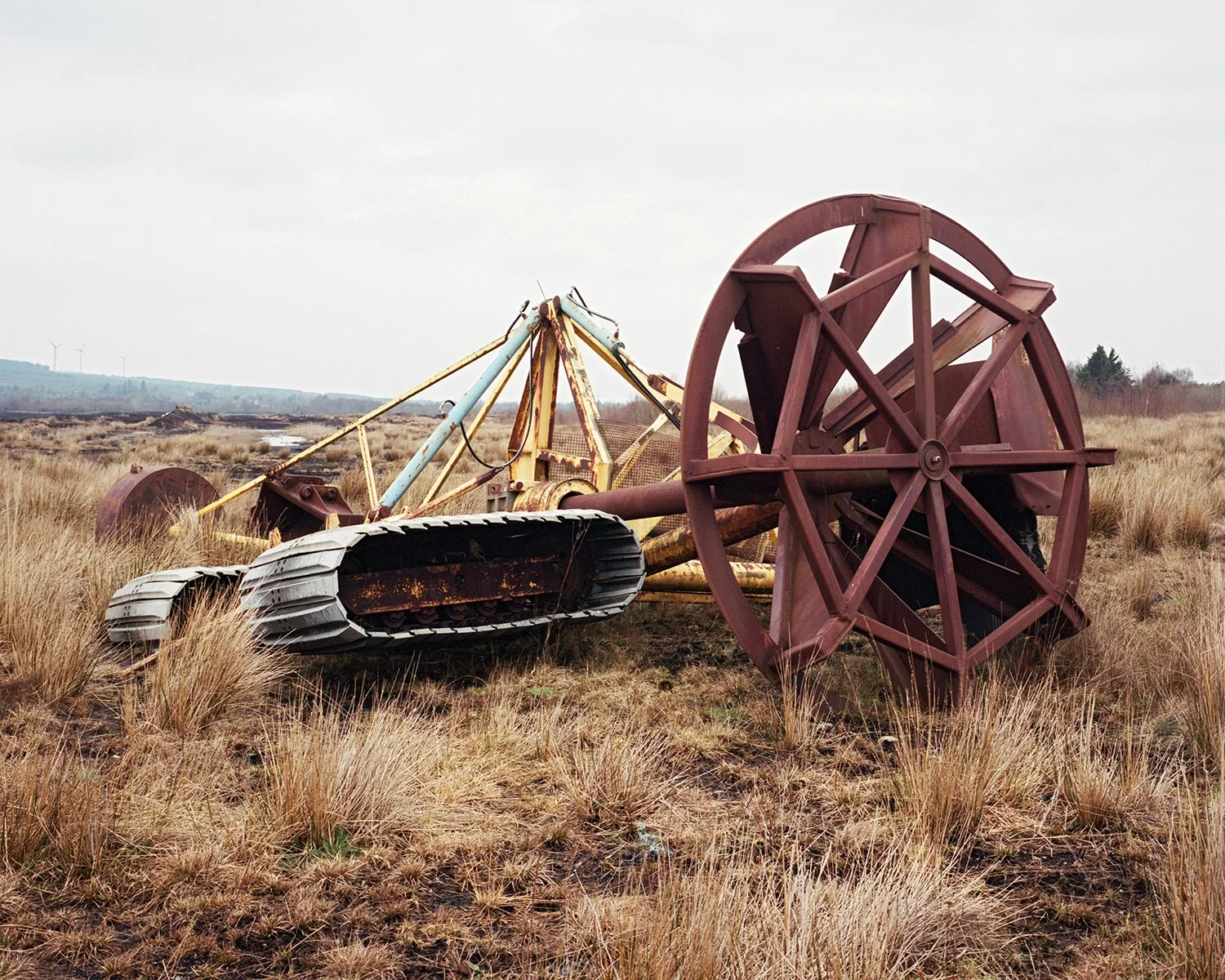
Disused mechanical ditcher, Cloontuskert, Co. Roscommon, 2025.
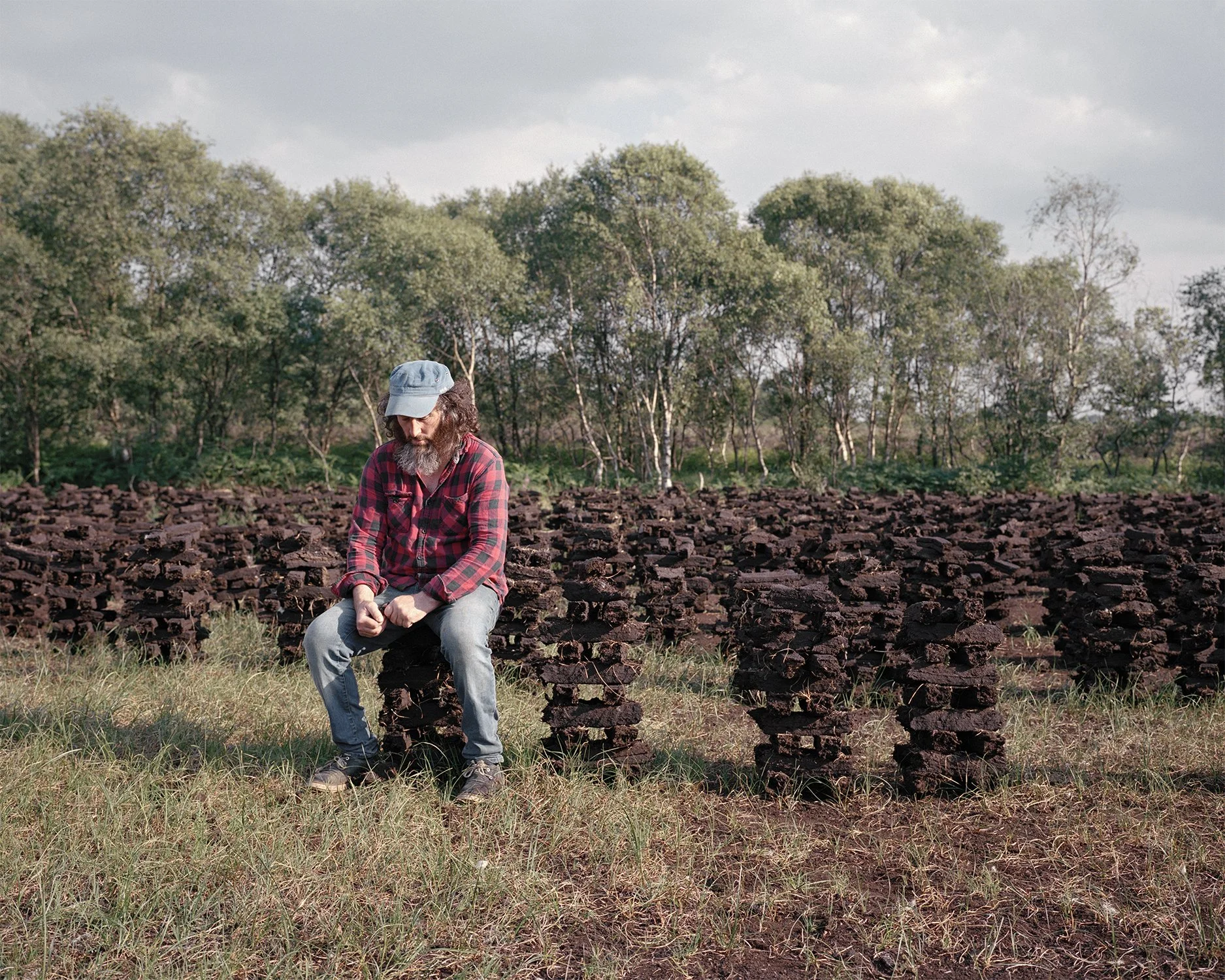
Tony with his turf, Carbury, County Kildare, 2018.
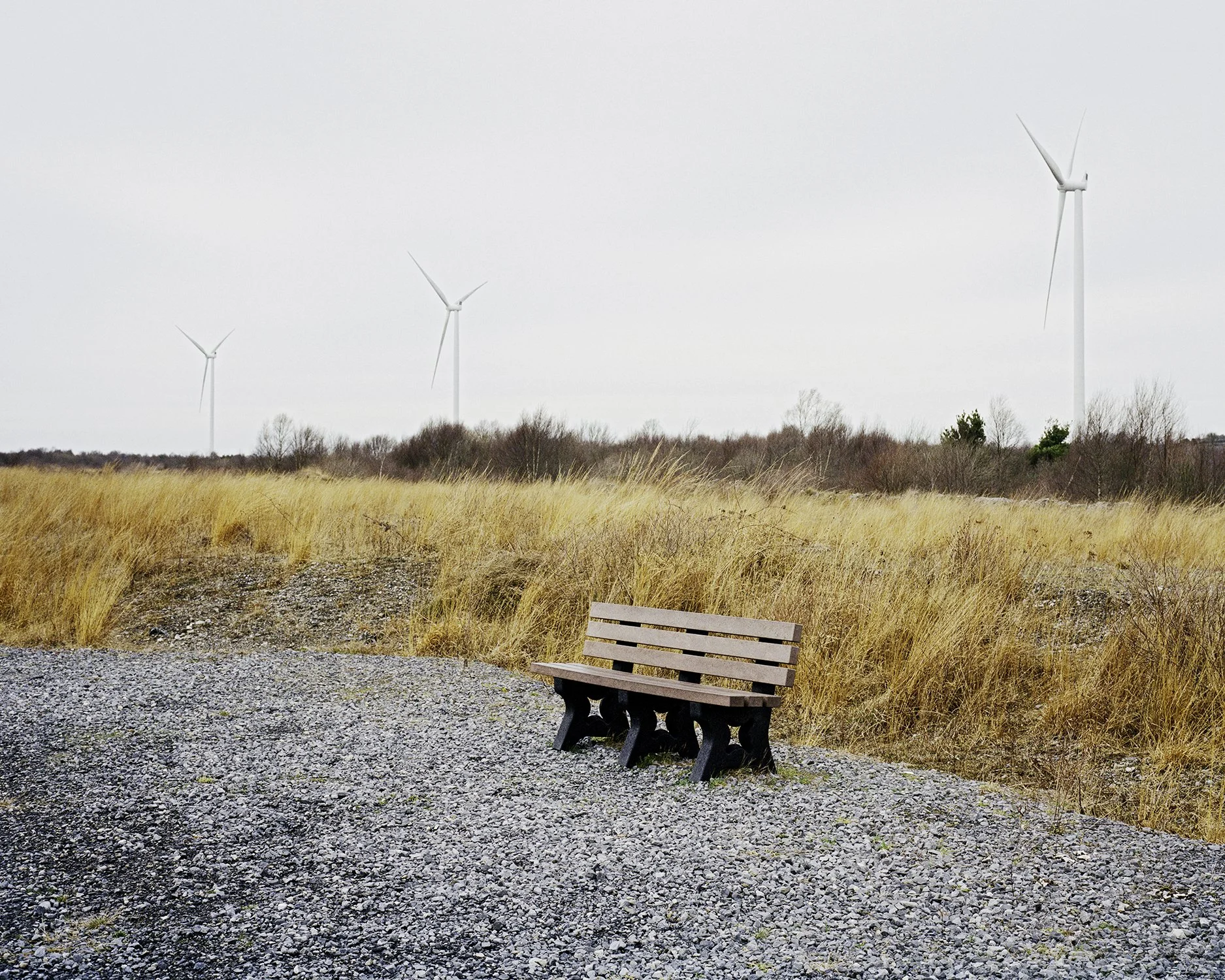
Mount Lucas Wind Farm commissioned in 2014, County Offaly, 2020.
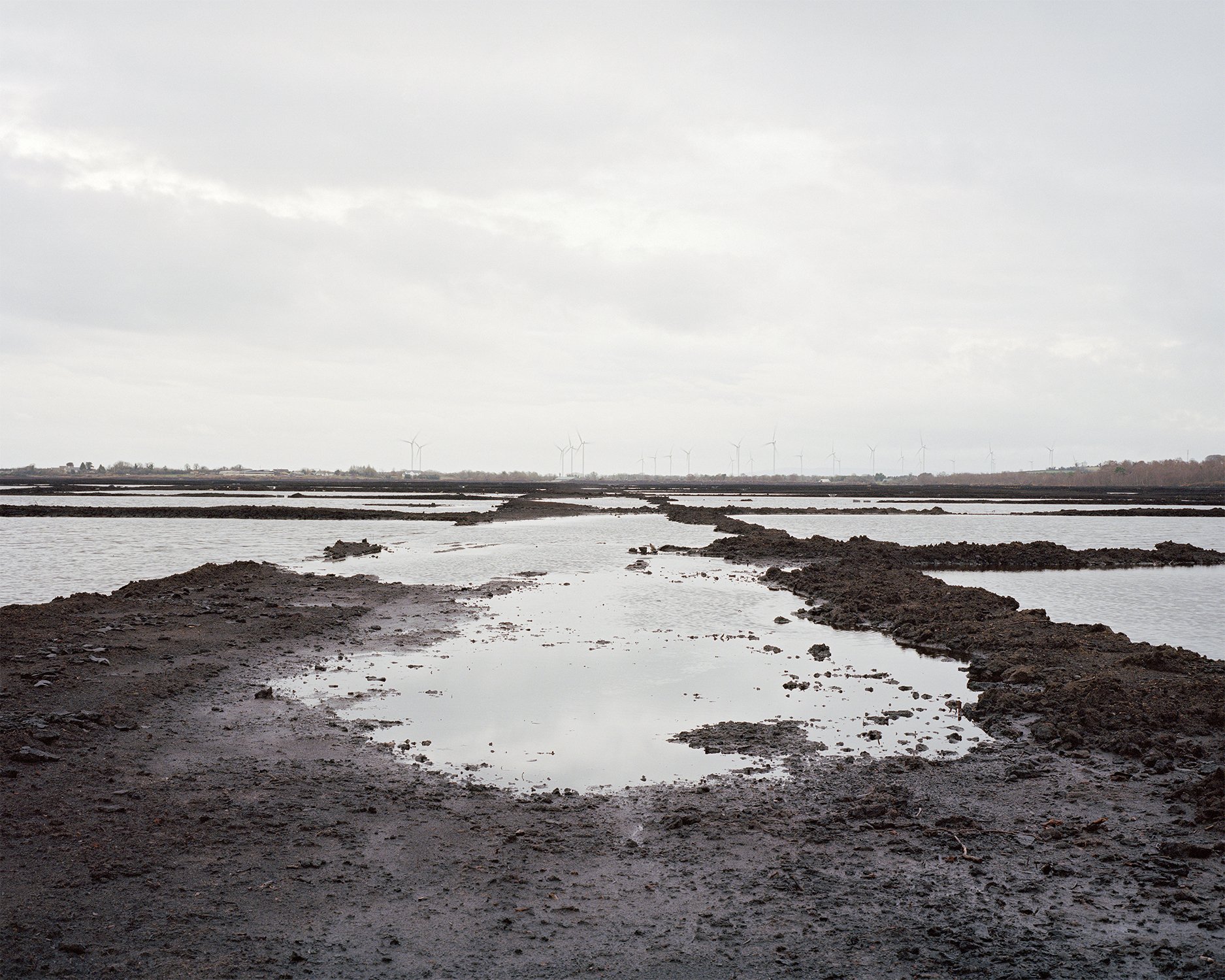
Recently rehabilitated Esker Bog with Mount Lucas windfarm in the distance, County Offaly, 2023.
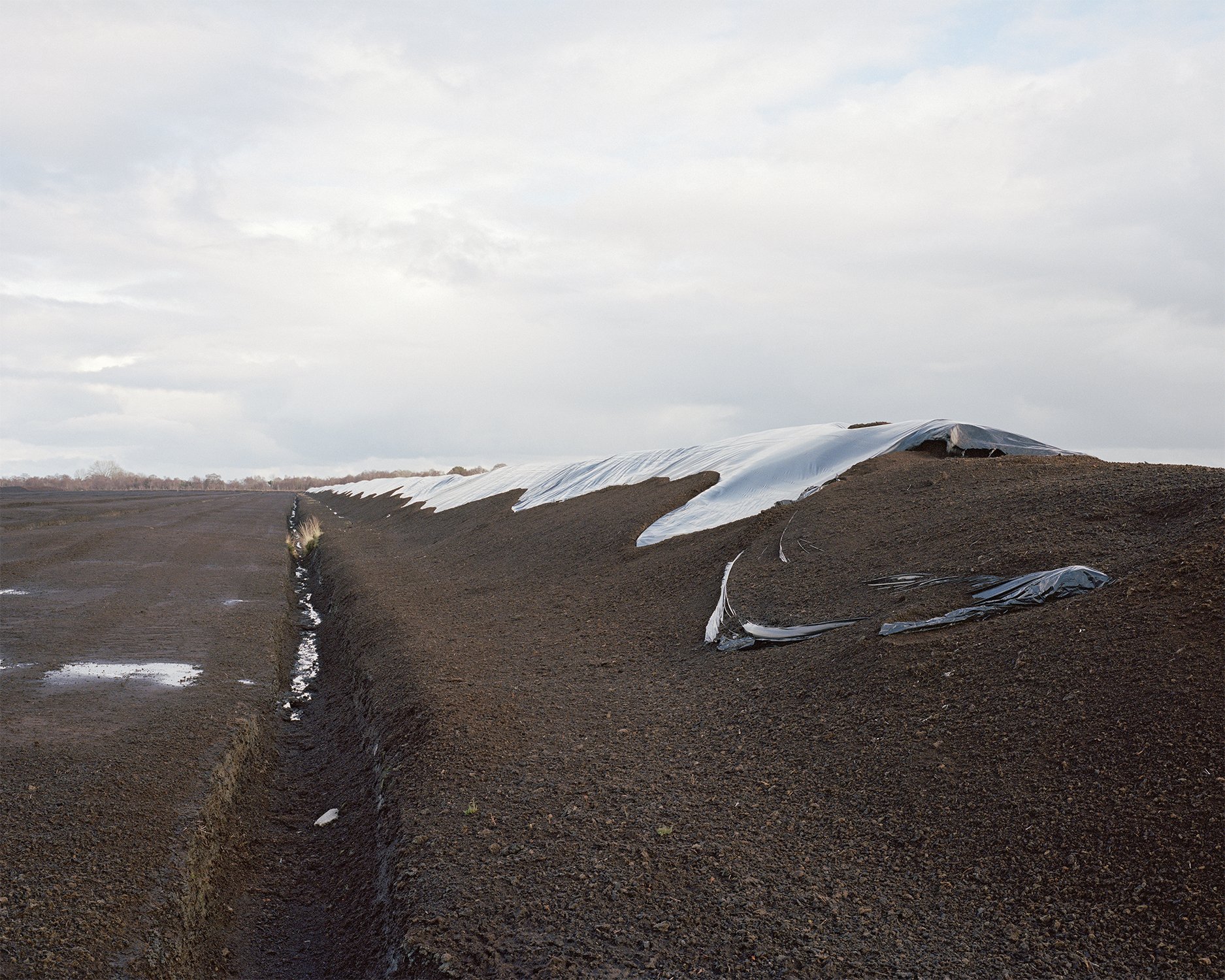
The last stockpile of harvested peat on Ballydermot Bog, County Offaly, 2021.
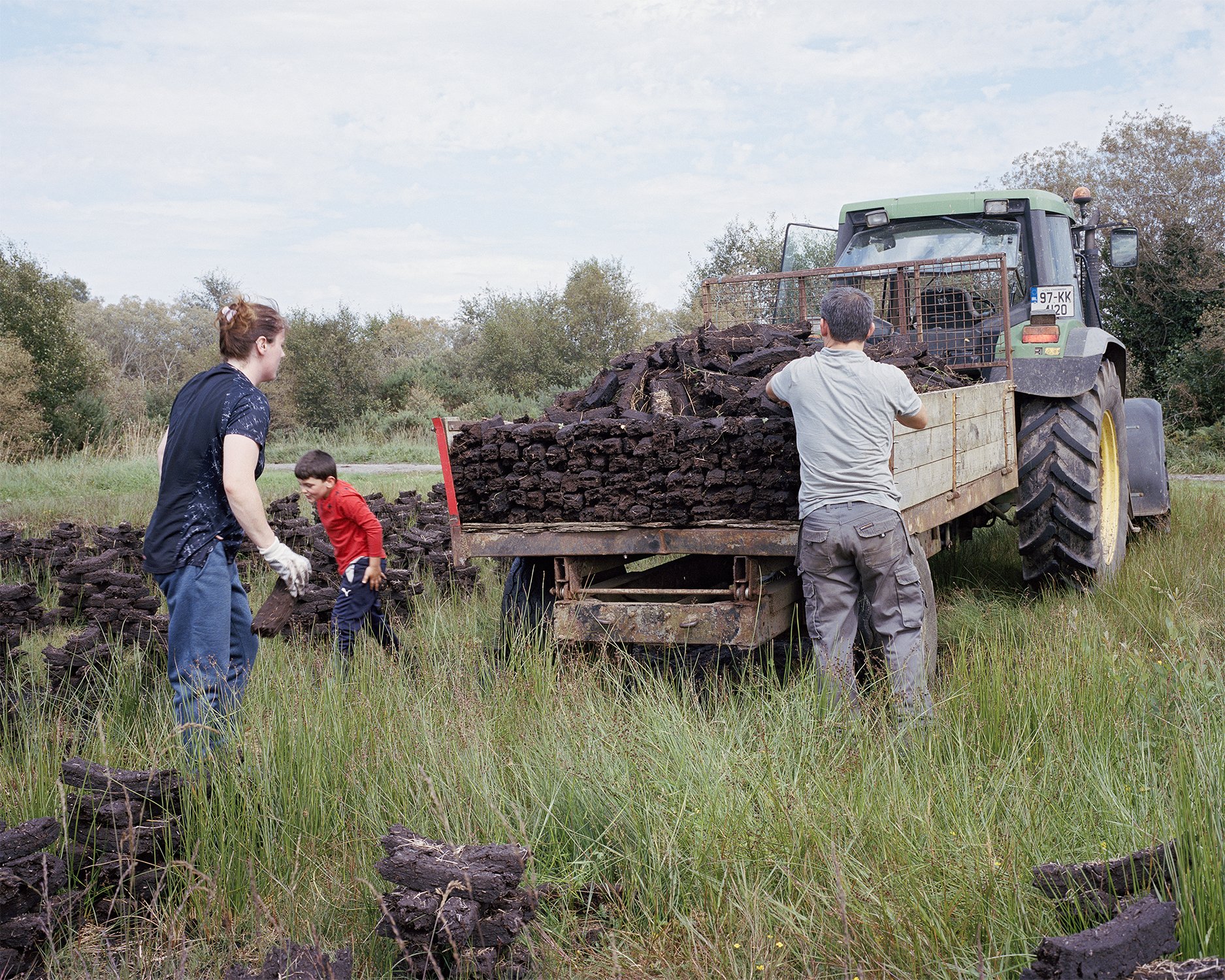
Locals bringing home the turf, Carbury, Co. Kildare, 2019.
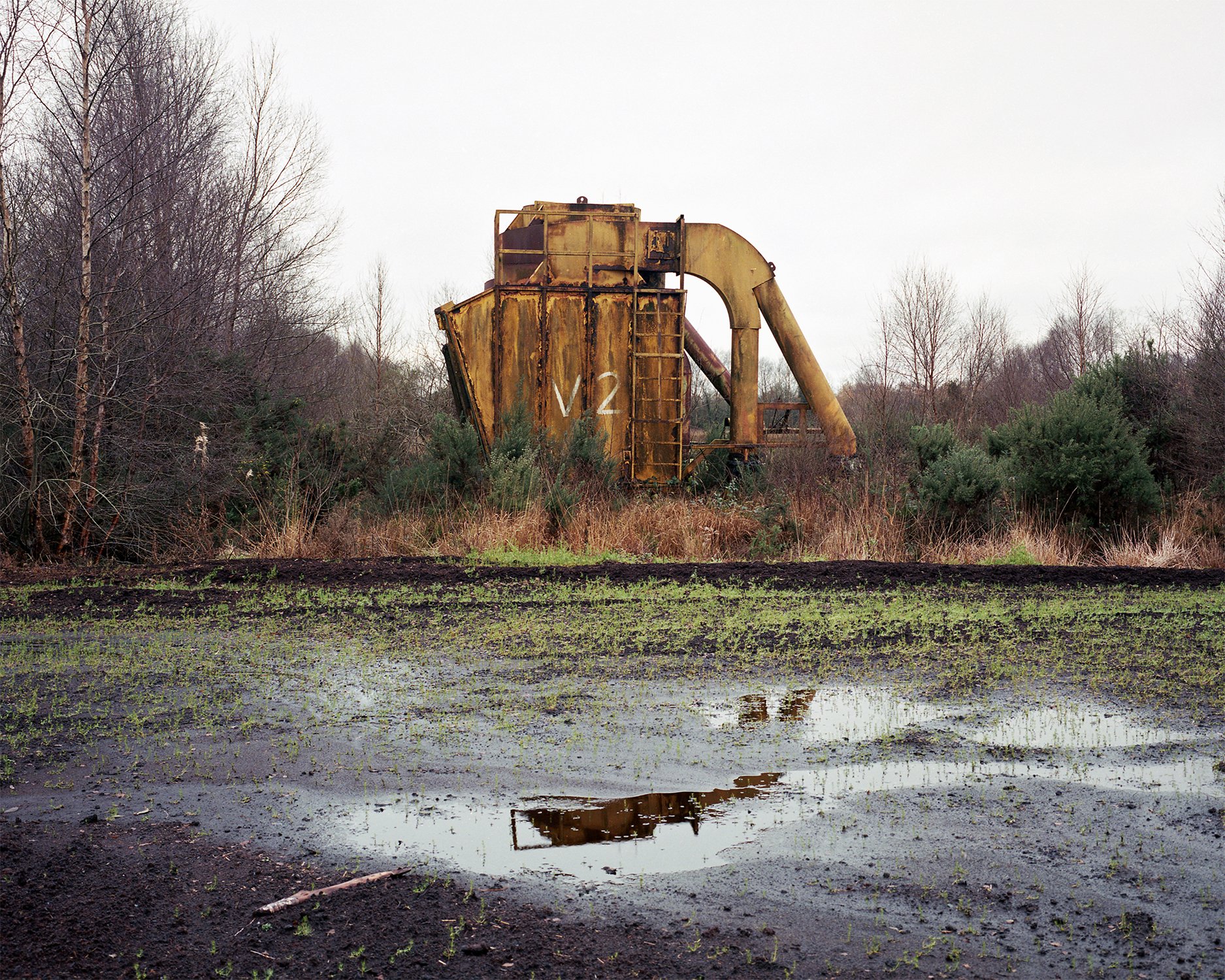
Disused peat harvesting machine, Co. Kildare, 2021.
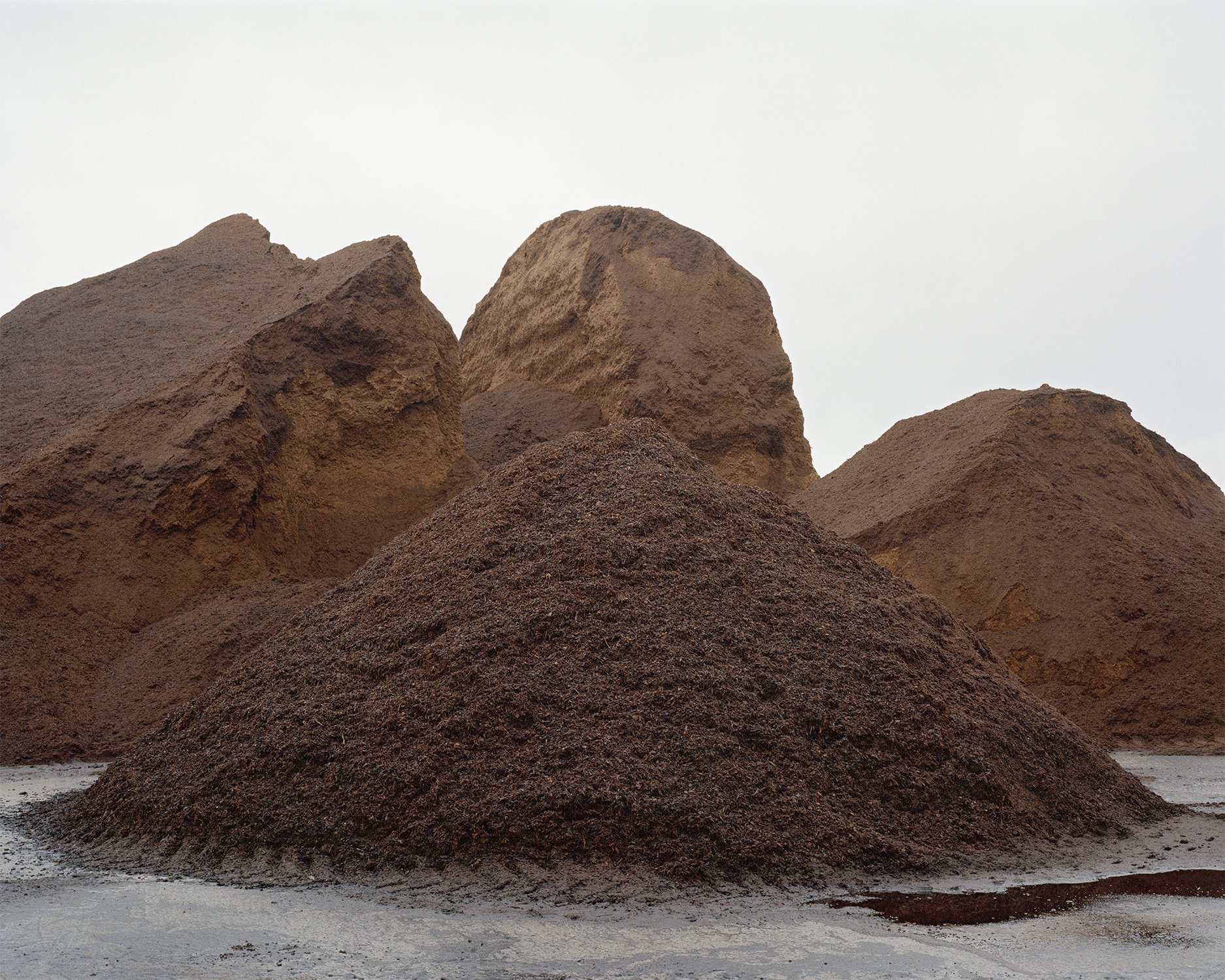
Harvested peat stockpiles at a horticulture production facility, Carbury, County Kildare, 2020.
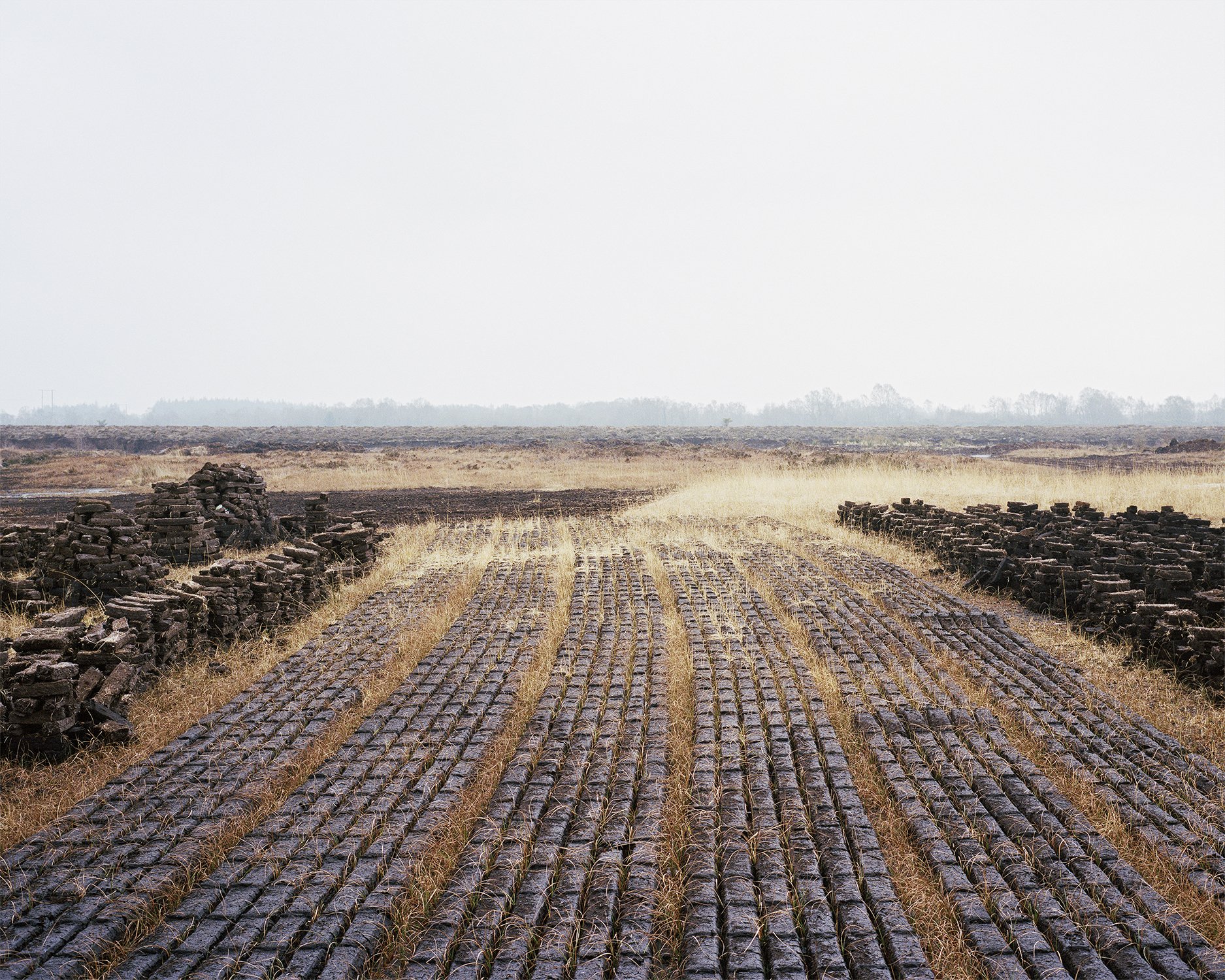
Rows of unfooted turf from previous harvest, Drehid, Co. Kildare, 2021.
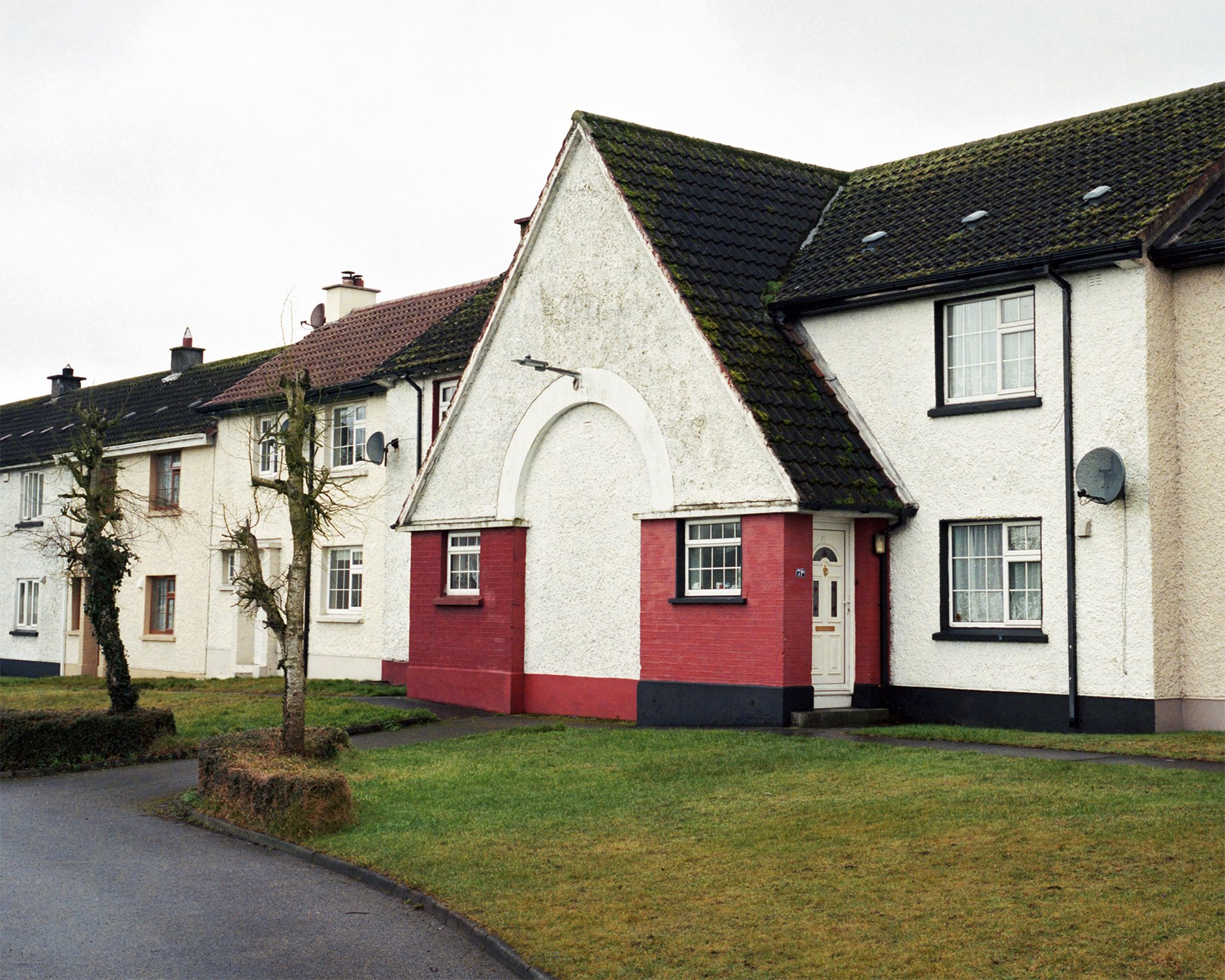
Rochfortbridge Frank Gibney designed Bord na Móna workers village, Co. Westmeath, 2023.
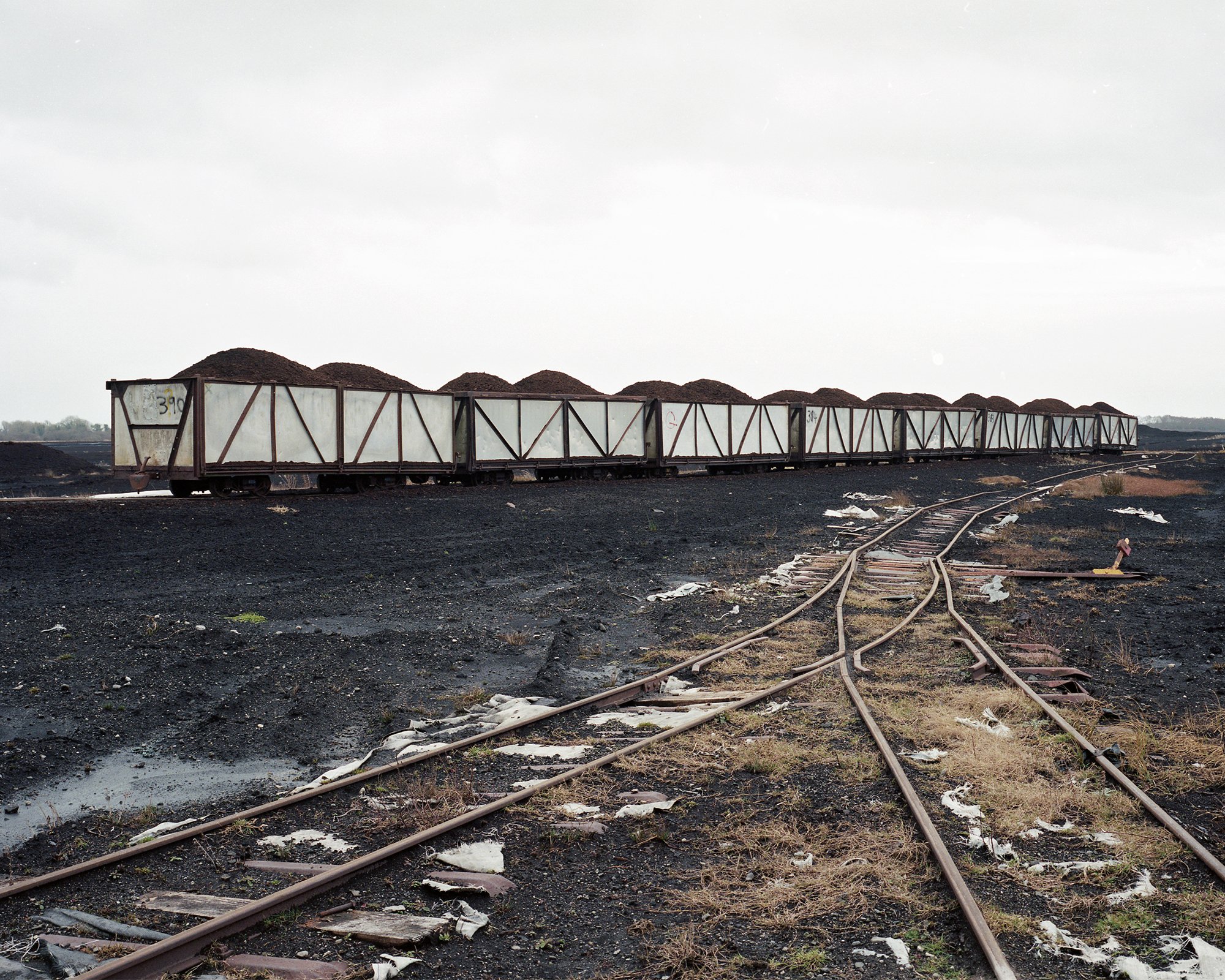
Light industrial rail system with loaded wagons, Gilltown, Co. Kildare, 2022.
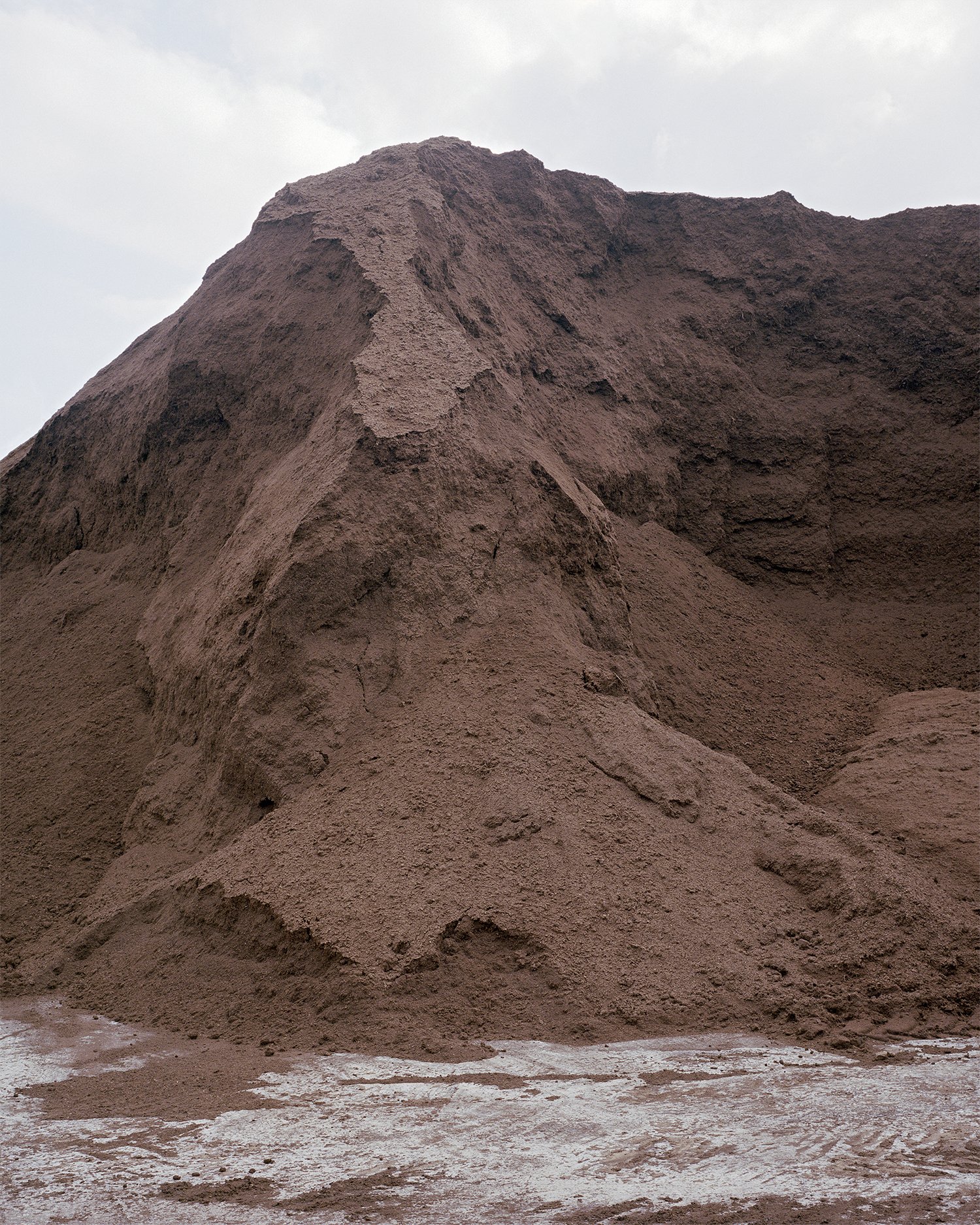
Harvested peat mound at a privately owned horticulture production facility, Co. Kildare, 2019.
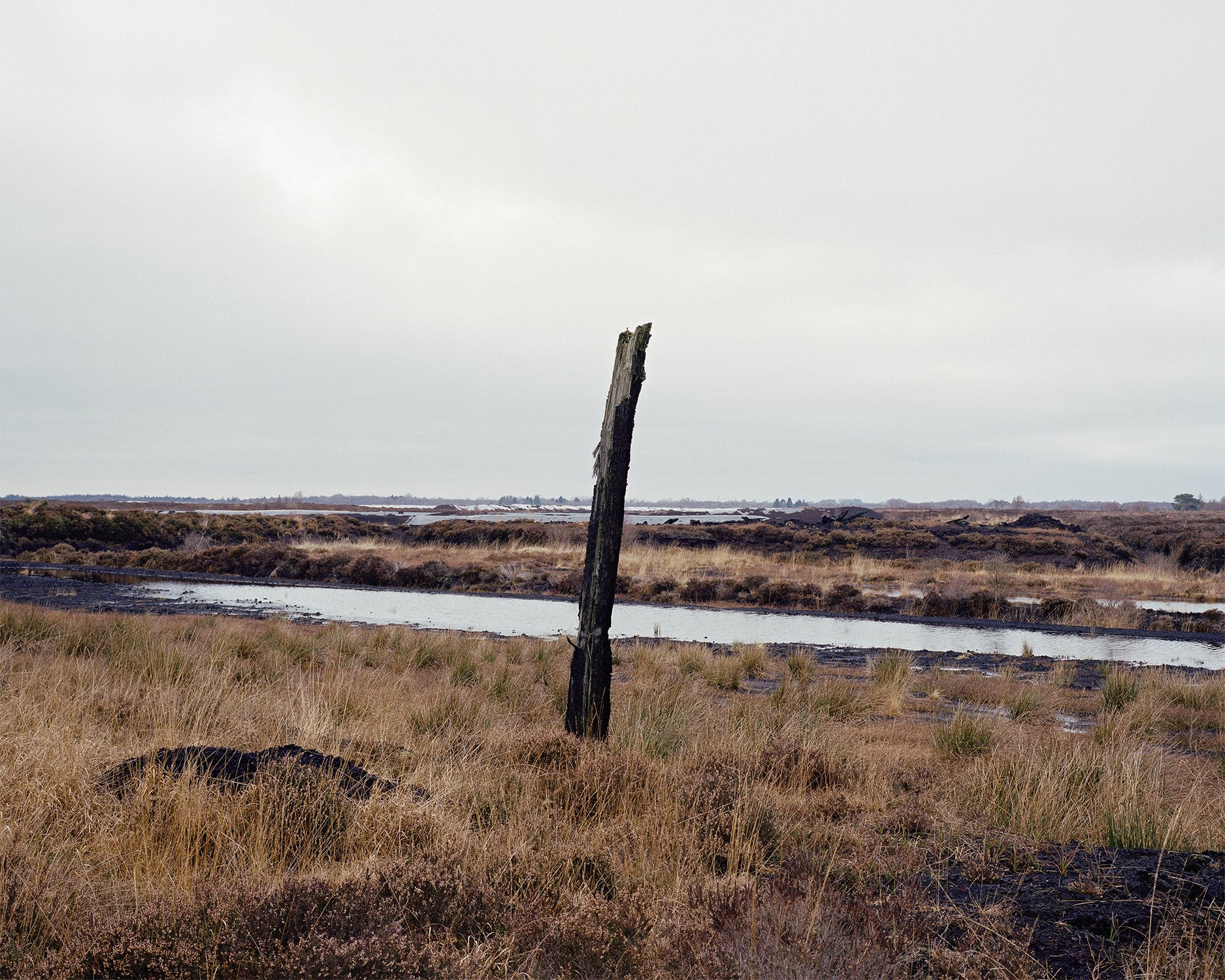
Bog Totem, Ticknevin, Co. Kildare, 2020.
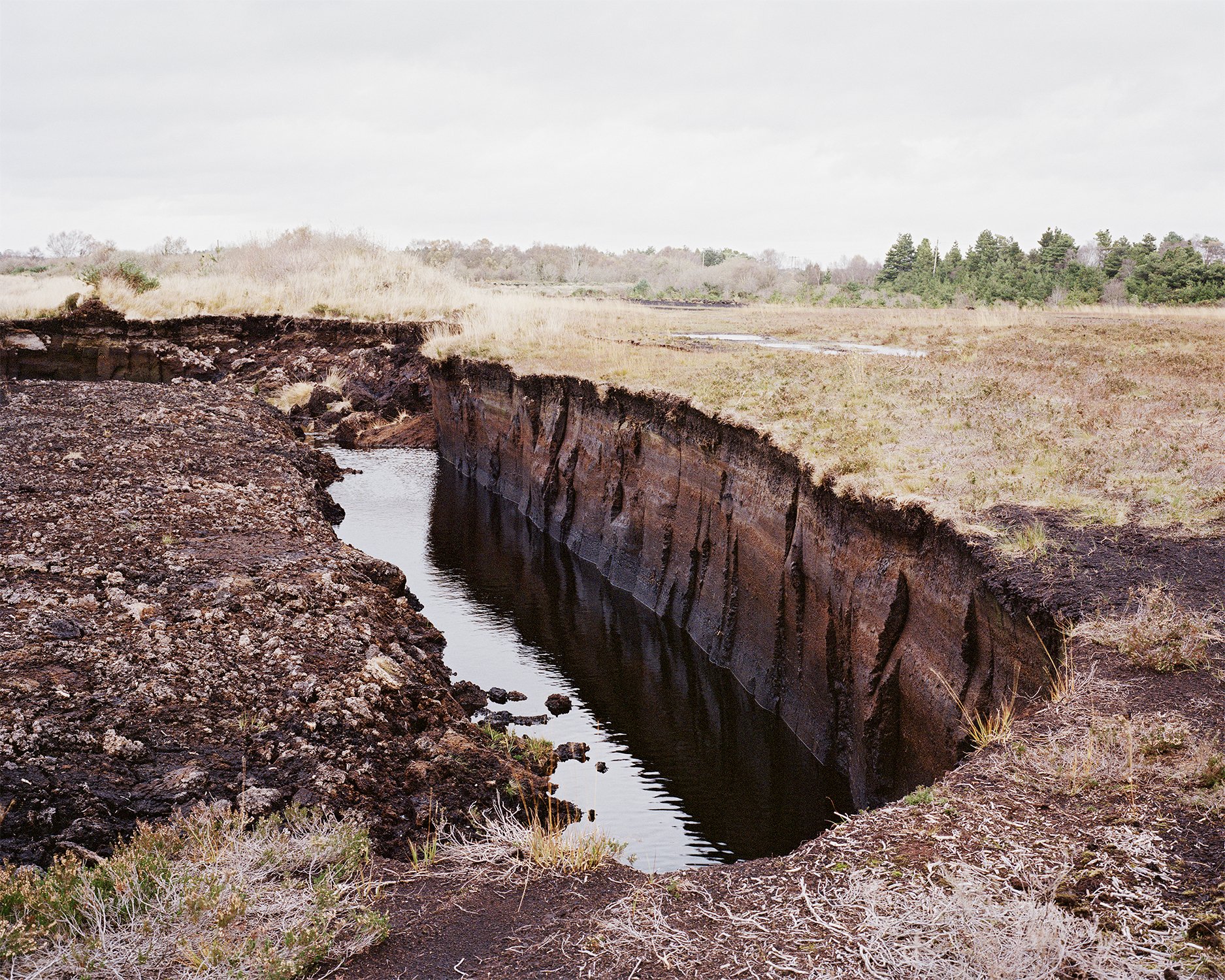
Facebank used for turf production, Co. Offaly, 2022.
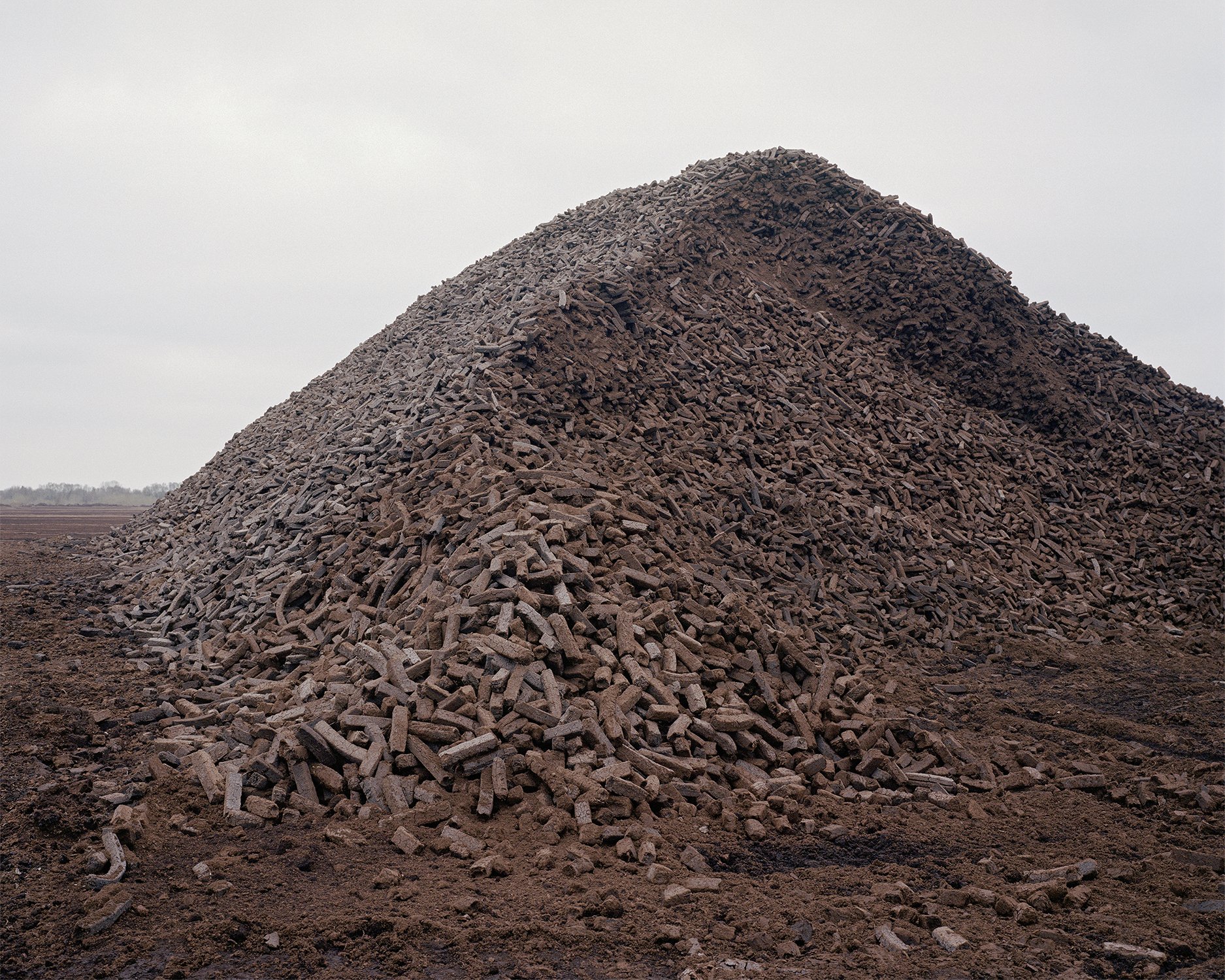
Large mound of mechanically harvested turf for horticultural use, Co. Offaly, 2020.
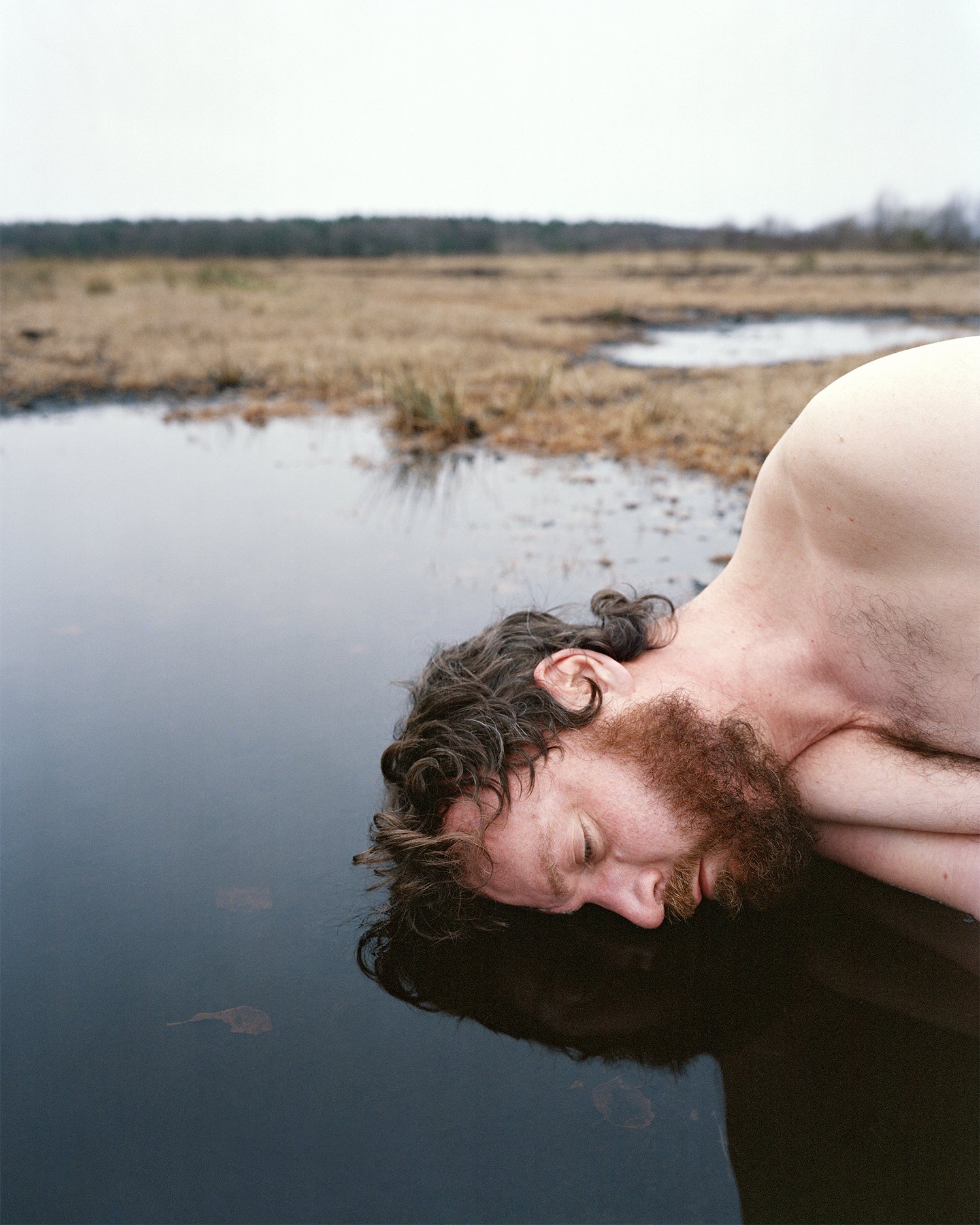
Bog self portrait, Carbury, County Kildare, 2019.
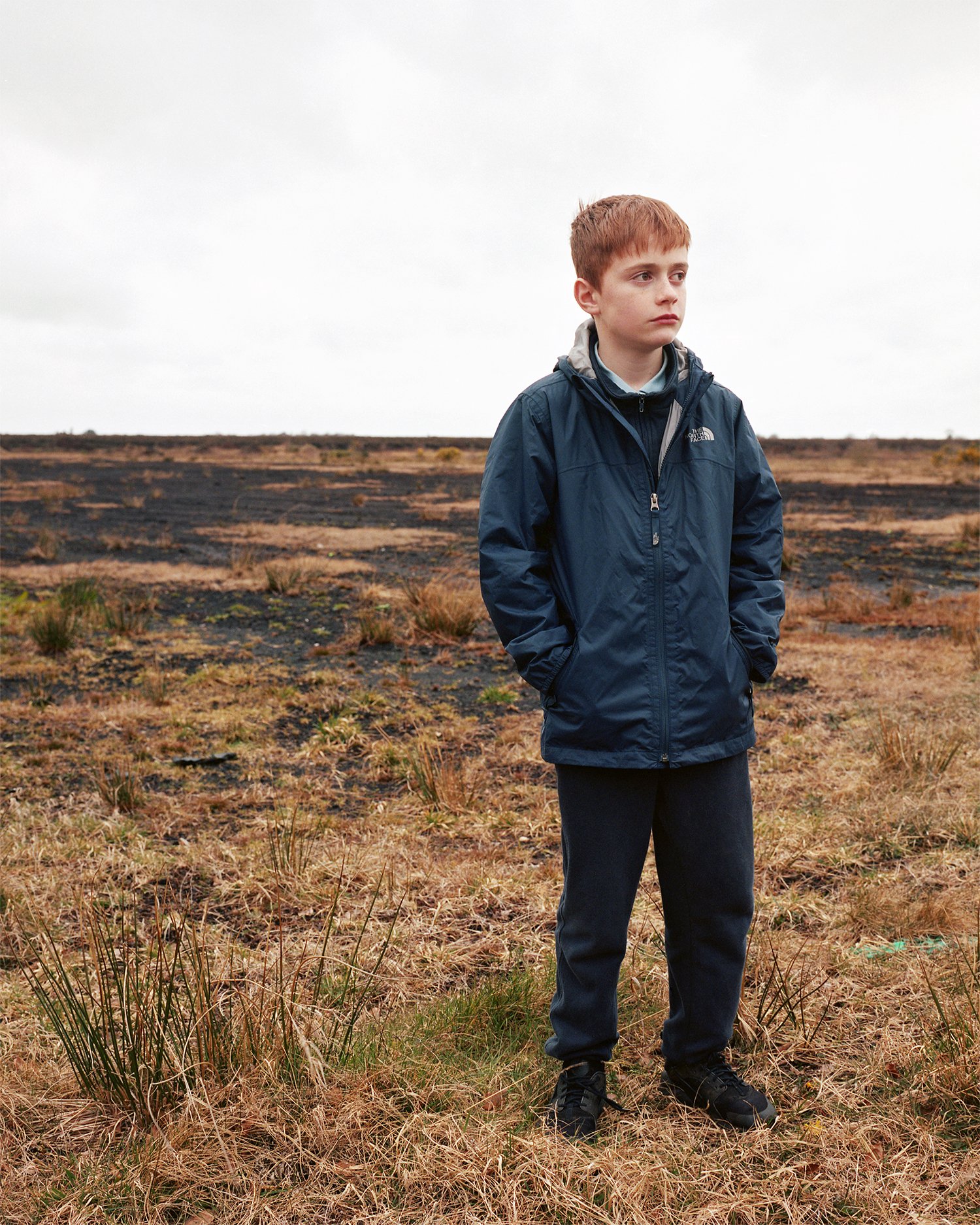
Fionn aged 10, Carbury, Co. Kildare, 2019.

3 generations of my family bringing home the turf, Carbury, Co. Kildare, circa late 1960's. (Courtesy of Ann Kavanagh).
‘Beneath | Beofhód’ (2017-2026)
Beneath | Beofhód, is a decade-long project exploring the social, cultural, historical and ecological importance of peat bogs in the Irish Midlands.
‘Beofhód’, an Irish word meaning ‘life beneath the sod’, evokes the primal and totemic significance of bogs in Celtic tradition. This metaphorical exploration of pre-Christian reverence for elemental energies is grounded in Hynan’s commitment to exploring evolving conversations around environmental justice, and our shifting relationship to these unique landscapes.
Drawing on Hynan’s authentic connection with his local community and region, the work traces the remnants of industrial peat harvesting, which brought substantial economic benefits and helped forge a strong sense of cultural identity and purpose in the area. Since the de-industrialisation of the boglands, large-scale commercial peat extraction has ceased. Tensions have emerged between the tradition of small-scale harvesting for domestic use and the need to protect remaining peatlands.
Through these immediate concerns, Hynan reflects on the endangered status of bog habitats and the evolving perception and value of peatlands in contemporary Ireland through postcolonial and late-capitalist social lenses. Bogs in the Midlands have undergone significant alteration and a move towards ecologically aware practices, with the construction of new renewable wind and solar farms, which bring their own questions and challenges.
Beneath | Beofhód is a timely and in-depth engagement with urgent issues of landscape, tradition, and community. At a moment of ongoing challenges around the environment and sustainability, restoring our ancient connections to the land seems more vital than ever. Hynan’s long-term focus on Irish boglands creates a profound sense of respect for the complexity of these landscapes in continuous flux, layered with history.
Photo Museum Ireland presented the premiere exhibition of Shane Hynan’s Beneath | Beofhód, a landmark, decade-long project exploring the social, cultural, historical and ecological importance of peat bogs in the Irish Midlands from the 30th May until the 5th July 2026. A Photo Museum Ireland National Tour will follow through 2026 and into 2027, in partnership with Source Arts Centre, Thurles, Roscommon Arts Centre, the Regional Cultural Centre, Letterkenny and Galway International Arts Festival, supported by Arts Council Touring and Project Awards.
Beneath | Beofhód is supported by the Arts Council of Ireland, Kildare Arts Service, Roscommon Arts Centre and the Photo Museum Ireland Artist Development Residency.
By Isabella Chiandini featured on RTE Radio One, Sunday Miscellany, Writing the Bog Part 2, 26th October 2025
“Shane Hynan appears to repose in total reliance upon those liquid and terrestrial elements, his sleeping posture revealing absolute trust and reciprocity. To me, that tranquil pose feels like a deliberate communication. It speaks of a visceral bond with that land, of respect for it, and of deep, abiding affection. Sleeping upon that earth, as one sleeps on a familiar pillow, is more than an embrace. There’s nothing exaggerated or theatrical in this gesture. Nothing predatory or self-absorbed in this body touching water and soil. Only a quiet symbiosis; harmony and grace.”
Bog self portrait, Carbury, County Kildare, 2019.
By Emmett Scanlon, Director of Irish Architecture Foundation as featured on RTE Radio One, Sunday Miscellany, Writing the Bog Part 1 (7th September 2025)
“He is interested in the now of the bog, what with do with and about it today. Understanding this deeply through the stories of the communities he works with. Of the many astounding photographs he has taken, there is one that remains in my mind. Taken as part of the Bog Bothy Project. It is of a beige empty room once occupied by workers. In the middle of the frame hangs a thick brown check shirt on a hook, fixed to a wall. There are some papers on a desk beside, not tidied, not messy either. It is almost as if the man who might wear that shirt on a cold day has stepped out for just a moment. When in truth he left this place, and the shirt and the life it was part of behind, some time ago. It is the most moving of photographs…. But there is no nostalgia in that photograph for me. Just the truth that all we can ever do to change the world we live in is act in the moment. When I look at this photograph I know that there is no point in getting stuck romanticising the past or wasting time idly dreaming about some fantastic future.”
By Emmett Scanlon, Director of Irish Architecture Foundation as featured on ‘Building on Bogs’ article (31st July 2025)
“It is not so much that cameras don’t lie – more that, in the right hands, they reveal things you would not otherwise see. Each one of Hynan’s photographs is moving back and forth through time, pulling the history of place into the right now, and drawing any divisive future plans into real and present conversations about the challenges of what it means to be of, live in, and act with a landscape as complex as a bog.”
“This project stood out for Hynan’s impeccable execution, evoking a tenacious stillness in the images that effortlessly carries the weight of the work’s environmental theme. The photographs possess a monuentality that suggest a point of no return; a moment of reckoning between the past and the future, and discovery and loss. Carefully balancing the some-times-contradictory requirements of these peat lands, Hynan’s images are at once expansive and immediate, reminding of the urgency of environmental degradation and the human impact of these responsibilities.” Catherine Troiano Curator, National Photography Collections at National Trust UK in Source Graduate Photography Online 2019
“With so much of the visual language around climate change focused on aircraft in flight, snaking traffic jams, or huge factories billowing fumes into the sky, it’s interesting to see a perspective so personal and human – real people working with their hands, as generations before them have done. Shane’s work acts as both a fascinating cultural insight, and addition to the climate discussion.” Editor’s comments from The Face of the Earth Life Framer Issue 64